Artificial Grass Drainage Guide: Why Most Installations Fail in Scotland
Understanding drainage requirements preventing waterlogging and expensive failures
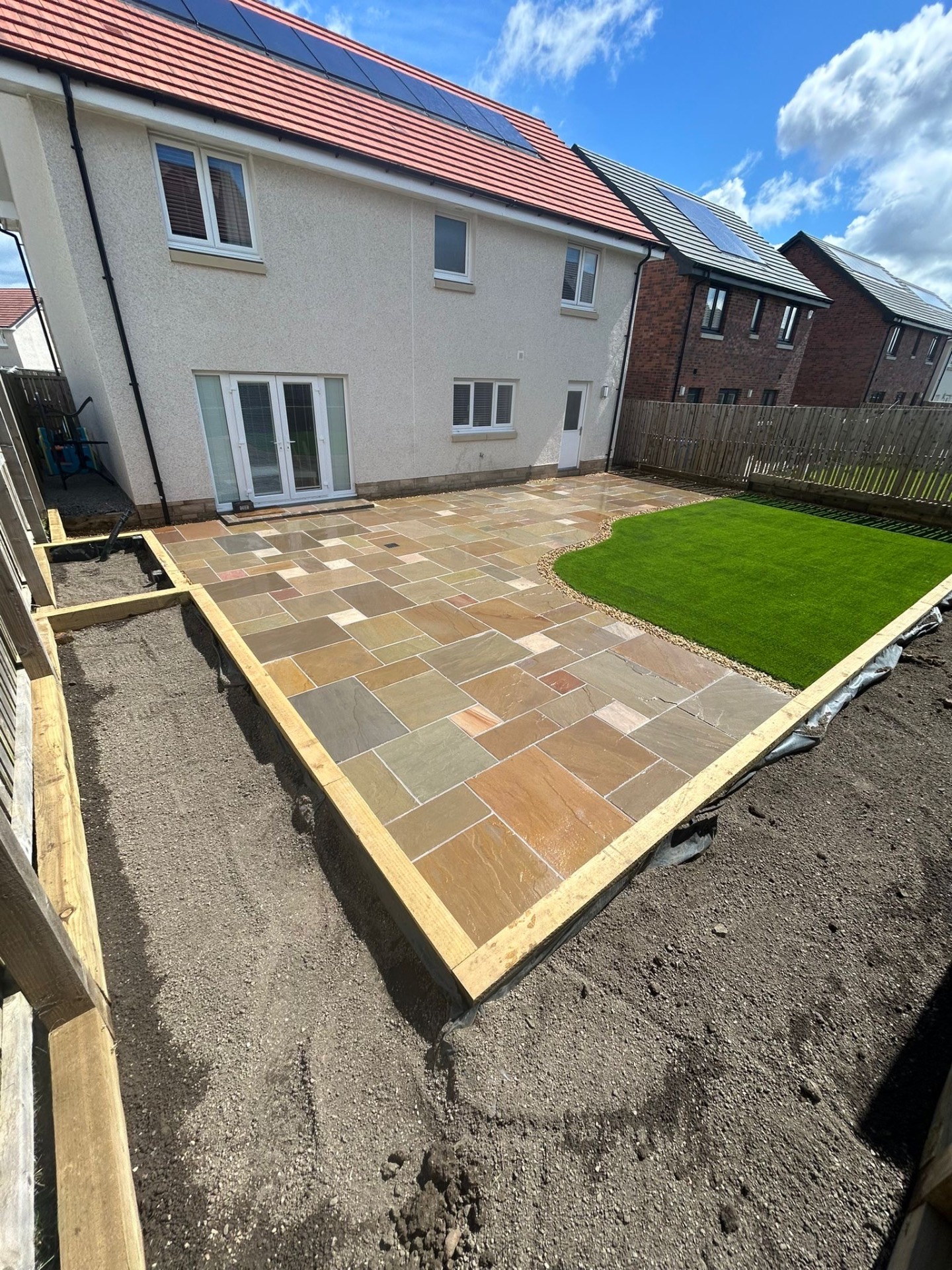
Inadequate drainage destroys more artificial grass installations in Scotland than any other factor. With annual rainfall ranging from 680mm in Edinburgh to over 1,000mm in Stirling, proper drainage engineering absolutely essential. This comprehensive guide explains why installations fail, what specifications Scottish conditions demand, and how professional installation prevents expensive waterlogging problems.
The Shocking Truth About Artificial Grass Drainage Failures
40-50% of budget artificial grass installations in Scotland develop drainage problems within 24 months. Most failures result from inadequate sub-base preparation, insufficient drainage specifications, or installers using English standards inappropriate for Scottish rainfall.
Proper drainage engineering costs £8-£15 extra per square metre but prevents £2,500-£4,500 remediation expenses. Understanding drainage requirements before installation saves thousands in future repairs.
Why Scotland's Climate Demands Superior Drainage
Scotland's rainfall patterns create unique challenges for artificial grass drainage:
Rainfall Intensity Across Central Scotland
- Edinburgh: 680mm annual rainfall (57mm average monthly)
- South Queensferry: 720mm annual rainfall (coastal exposure increases intensity)
- Stirling: 1,000mm annual rainfall (85mm average monthly)
- Falkirk: 850mm annual rainfall (71mm average monthly)
- Livingston: 750mm annual rainfall (63mm average monthly)
More significantly, Scotland experiences intense rainfall events delivering 20-40mm within 2-3 hours—overwhelming inadequate drainage systems. These concentrated downpours occur 15-25 times annually across Central Scotland testing artificial grass drainage capacity.
Seasonal Drainage Challenges
Scottish drainage systems must handle dramatically different seasonal conditions:
- Autumn (September-November): Highest rainfall period with saturated ground reducing percolation. Fallen leaves block drainage holes requiring frequent maintenance.
- Winter (December-February): Freeze-thaw cycles affect sub-base stability. Snow melt creates brief intense drainage demands. Frozen ground prevents normal percolation temporarily.
- Spring (March-May): Persistent light rainfall keeps surfaces constantly wet. Inadequate drainage never fully dries causing odor and deterioration.
- Summer (June-August): Occasional intense thunderstorms test maximum drainage capacity. Brief intense rainfall (30mm in 1 hour) reveals inadequate systems.
Critical Drainage Specifications for Scottish Artificial Grass
Minimum Drainage Rate Requirements
Artificial grass drainage rate measured in litres per square metre per minute (litres/m²/minute) determines water removal capacity:
Scottish Climate Drainage Standards
- Standard Residential: Minimum 30 litres/m²/minute (adequate for typical Scottish rainfall)
- High-Traffic or Pet Areas: 40-50 litres/m²/minute (handles concentrated use plus rainfall)
- Low-Lying or Problematic Sites: 50+ litres/m²/minute (manages challenging drainage conditions)
- Commercial or Sports Applications: 60+ litres/m²/minute (heavy use plus maximum rainfall)
Why budget artificial grass fails: Products claiming 15-20 litres/m²/minute drainage barely cope with light showers—completely overwhelmed by Scottish rainfall intensity. Water pools on surface, cannot percolate quickly enough, and creates persistent waterlogging.
BS 7044 British Standards for Artificial Grass
British Standard BS 7044 specifies artificial grass performance requirements. While not mandatory for residential installations, it provides crucial quality benchmarks:
- Drainage Rate: Minimum 180mm per hour (equivalent to 30 litres/m²/minute) for residential applications
- Permeability Testing: Products must maintain drainage rates after simulated aging and use
- Quality Assurance: BS 7044 certification indicates reliable testing and quality control
Always verify artificial grass meets or exceeds BS 7044 drainage standards. Products lacking certification often use inflated claims without independent testing—drainage performance may differ dramatically from specifications.
The Sub-Base Foundation: Where Most Failures Begin
80% of artificial grass drainage problems originate from inadequate sub-base installation—not the grass itself. Professional sub-base preparation essential for Scottish conditions:
Proper Type 1 MOT Sub-Base Specification
Type 1 MOT (Ministry of Transport) stone provides optimal drainage sub-base containing graded aggregates from 0-40mm. This mixture compacts to stable base while maintaining voids facilitating water percolation.
Scottish Installation Sub-Base Requirements
- Minimum Depth: 75mm compacted for standard residential (100mm for clay soils or high-traffic)
- Material: Type 1 MOT clean stone meeting highways specifications
- Compaction: Minimum 95% compaction using plate compactor (4-5 passes per 50mm layer)
- Layers: Install in maximum 50mm layers, compact each individually
- Gradient: Minimum 1:60 fall (1.67% slope), preferably 1:40 to 1:50 (2-2.5%)
Common budget installation failure: Installers use 25-40mm sub-base depth, skip proper compaction, or use inappropriate materials (sand, soil, recycled aggregates). These inadequate foundations cause settlement, poor drainage, and surface irregularities within 12-24 months.
Geotextile Membrane: The Critical Barrier
Heavy-duty geotextile membrane serves multiple essential functions:
- Weed Prevention: Blocks weed growth from underlying soil
- Sub-Base Protection: Prevents contamination from soil or clay mixing into drainage stone
- Ground Separation: Maintains clear boundary between existing ground and drainage layers
- Enhanced Drainage: Allows water percolation while preventing silt migration
Use minimum 100gsm (grams per square metre) geotextile membrane rated for drainage applications. Budget weed membranes (40-60gsm) tear easily and provide inadequate protection—invest in proper materials preventing future problems.
Sharp Sand Blinding Layer
Final 25-30mm layer of sharp sand creates perfectly smooth surface for artificial grass installation. This layer fills voids in Type 1 MOT stone, provides final leveling adjustment, and facilitates even artificial grass laying.
Sharp sand (also called grit sand) drains freely unlike building sand which retains water. Using incorrect sand type causes surface water retention compromising drainage performance.
Gradient and Surface Water Management
Why Gradient Matters in Scottish Installations
Even perfect sub-base fails without proper surface gradient directing water away from buildings and preventing pooling. Scottish rainfall intensity requires effective surface water management:
Gradient Specifications
- Minimum Acceptable: 1:60 (1.67% slope) - barely adequate for Scottish conditions
- Recommended: 1:40 to 1:50 (2-2.5% slope) - optimal drainage without appearing obviously sloped
- Maximum Practical: 1:30 (3.3% slope) - steeper gradients create running difficulties
Common mistake: Installers follow existing ground levels rather than creating proper drainage gradients. Level or poorly graded surfaces cause inevitable water pooling regardless of sub-base quality.
Perimeter Drainage Solutions
Large artificial grass areas (over 50m²) benefit from perimeter drainage collecting and directing runoff:
- ACO Drainage Channels: Installed at low points collecting surface water directing to drains or soakaways
- French Drains: Gravel-filled trenches around perimeters collecting subsurface water on problematic sites
- Soakaway Connections: Direct excessive water to purpose-built soakaways on sites with poor natural drainage
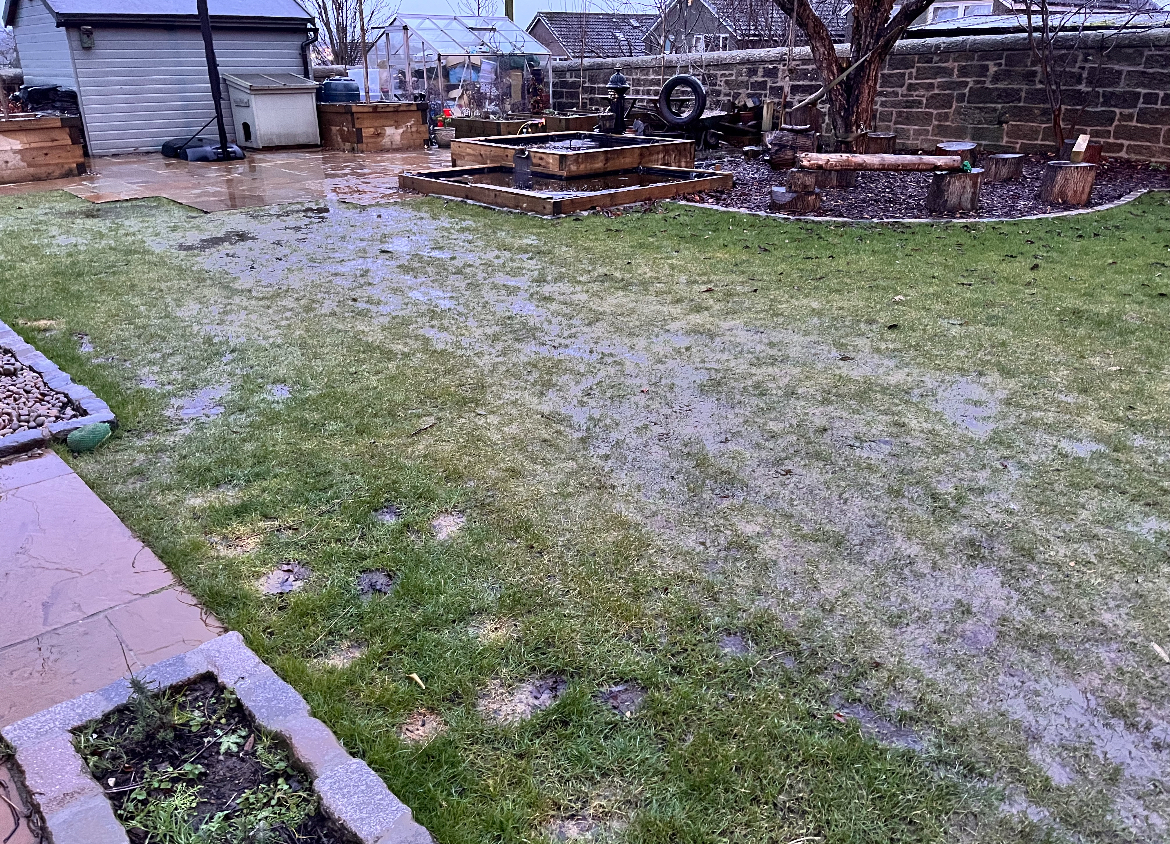
ACO Drain Systems: Professional Surface Water Management
ACO drain channels provide professional-grade surface water collection essential for Scottish gardens. These linear drainage systems intercept surface runoff before it overwhelms sub-base drainage capacity—particularly critical on sloped sites or areas with concentrated water flow.
Why ACO Drains Matter in Scotland
Scottish rainfall intensity creates concentrated surface runoff overwhelming even properly installed sub-base drainage. ACO channels collect this runoff at critical points—patio edges, low points, retaining wall bases—directing water safely to drainage points rather than allowing it to flood artificial grass surfaces.
ACO Drain Installation Locations
- Patio Edges: Collect water flowing from hard surfaces onto grass areas
- Retaining Wall Bases: Intercept water running down walls preventing saturation
- Low Points: Capture concentrated flow in natural drainage channels
- Downpipe Connections: Manage roof water preventing overwhelmed grass areas
- Driveway Boundaries: Collect runoff from paved areas before reaching grass
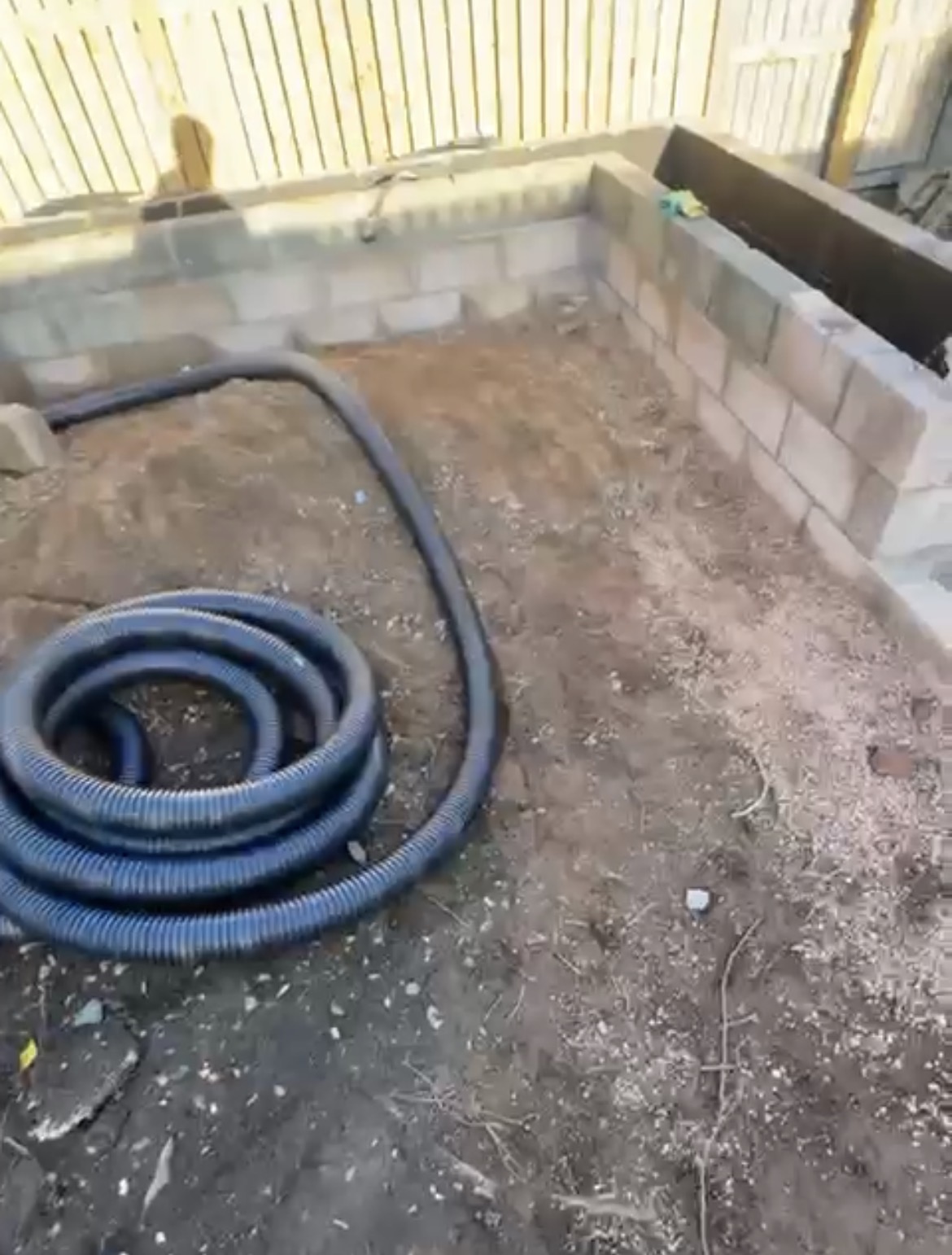
ACO Drain System Components
Professional ACO drain systems consist of modular galvanized steel or polymer concrete channels with removable grates allowing debris removal. For garden applications:
- Channel Depth: 80-100mm minimum for garden applications handling Scottish rainfall intensity
- Grate Type: Galvanized steel or polymer grates with slot widths preventing heel catching
- Fall Gradient: Minimum 1:150 fall within channel directing water toward outlet
- Outlet Connections: Connect to 100-110mm drainage pipes leading to soakaways or main drains
Cost consideration: ACO drain systems cost £45-£75 per linear metre installed but prevent £2,500-£4,500 drainage failure remediation on problematic sites—excellent investment for challenging locations.
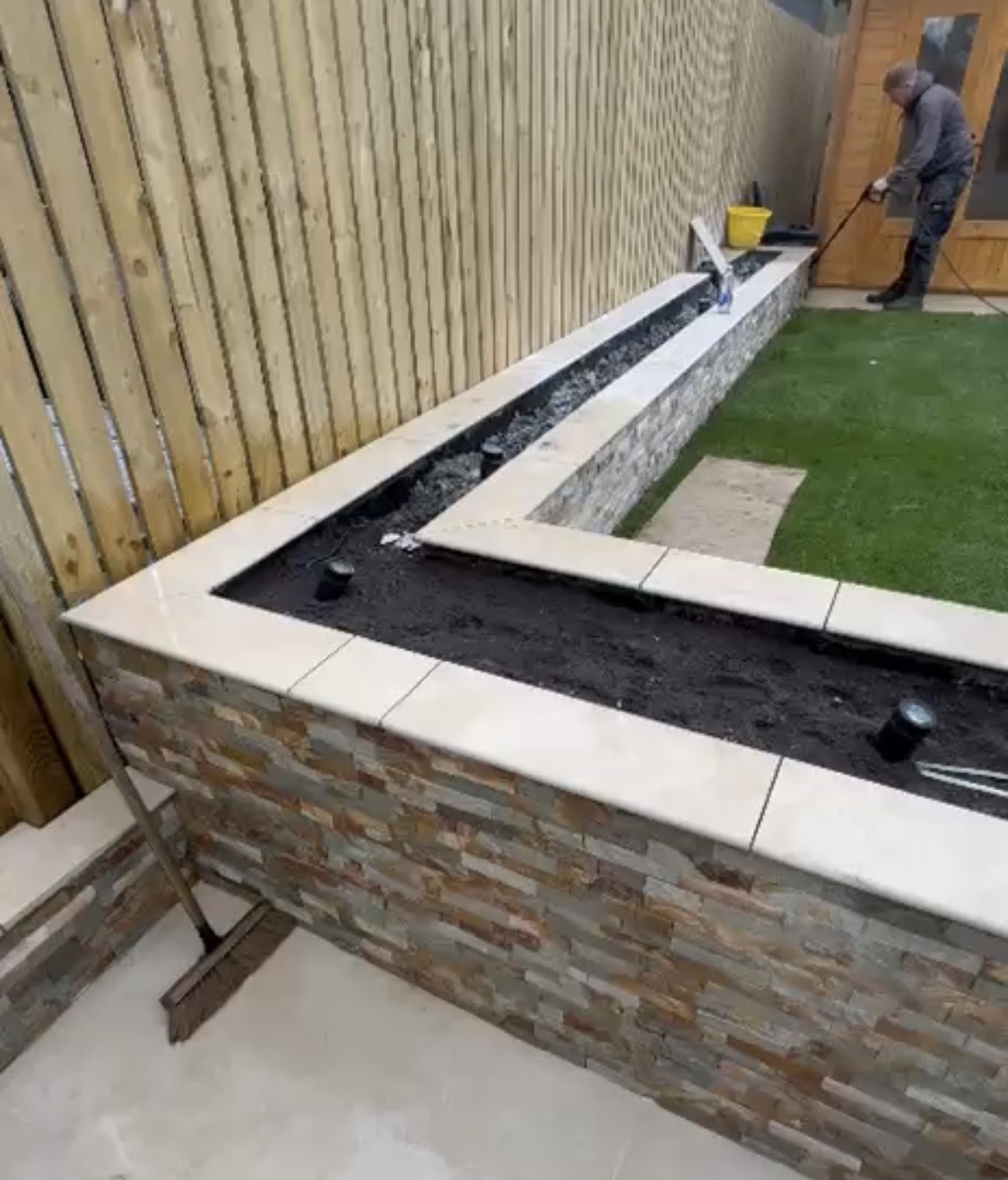
Clay Soil Drainage Solutions: Scotland's Biggest Challenge
Heavy clay soil presents the most challenging drainage conditions across Central Scotland—particularly Falkirk, Bathgate, parts of Livingston, and new build estates. Clay's near-zero permeability prevents water draining through sub-base requiring specialized solutions.
Why Clay Soil Causes Artificial Grass Failures
Clay soil particles (under 0.002mm diameter) pack densely creating impermeable barrier. When wet, clay expands blocking all drainage. Even properly installed Type 1 MOT sub-base fails on clay because water cannot escape—it accumulates in sub-base layer creating saturated conditions causing surface waterlogging.
Clay Soil Drainage Statistics
Clay permeability rate: 0.001-0.01 mm/hour (compared to Type 1 MOT: 300+ mm/hour)
This 30,000x difference explains why standard installations fail on clay soil. Water enters sub-base normally but cannot escape underneath—accumulating until it floods surface creating permanent waterlogging regardless of artificial grass quality.
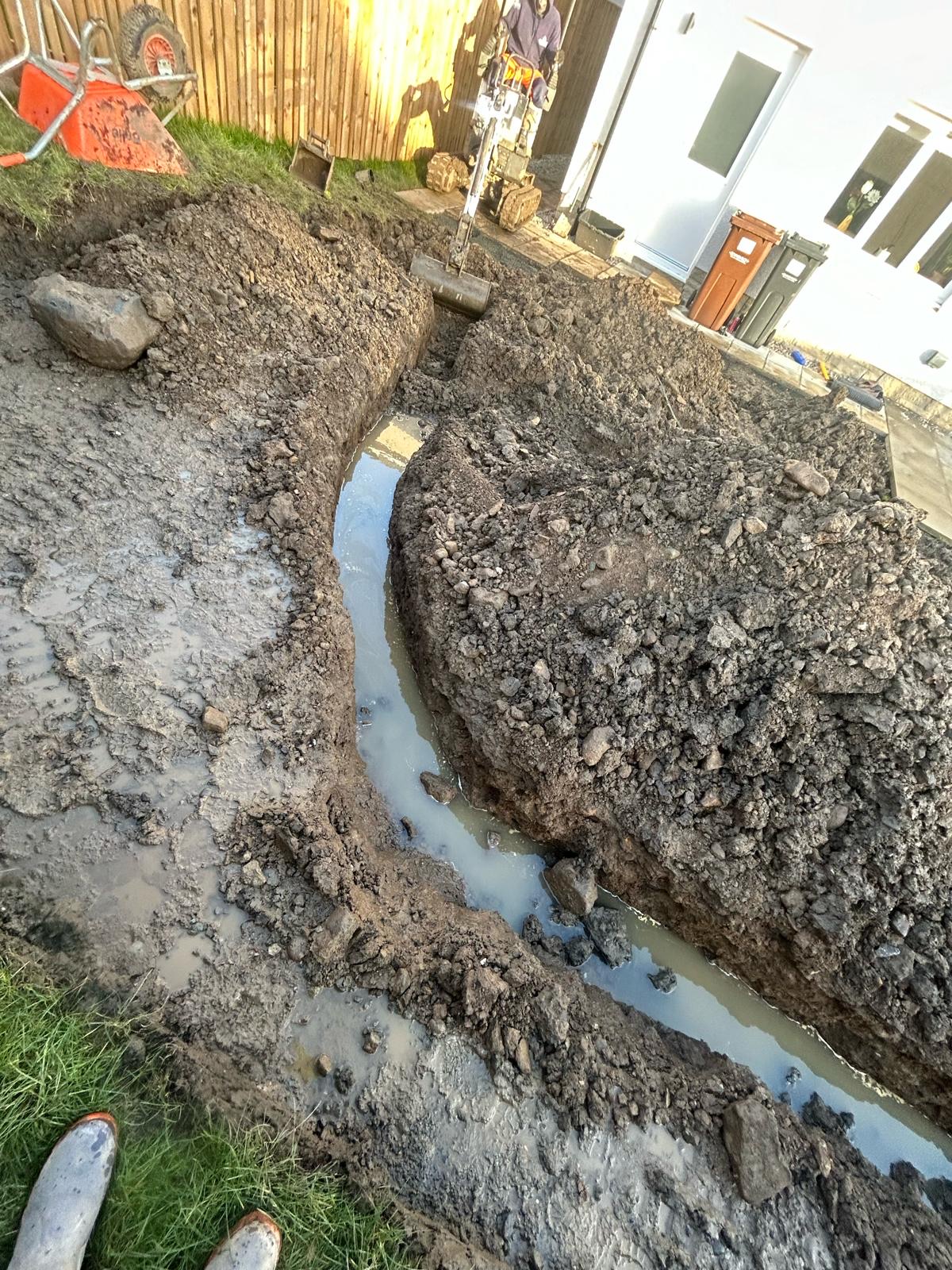
Professional Clay Soil Drainage Solutions
Successful artificial grass on clay requires removing impermeable layer and creating escape routes for accumulated water:
Clay Soil Installation Specifications
- Excavation Depth: Minimum 100-125mm removing all clay layer (vs standard 75mm)
- Geotextile Membrane: Heavy-duty 125gsm+ membrane preventing clay contamination of sub-base
- Sub-Base Depth: 100mm compacted Type 1 MOT minimum (vs standard 75mm)
- Gradient: Enhanced 1:40 minimum fall (vs standard 1:60) ensuring positive drainage
- Perimeter Drainage: French drains or ACO channels collecting accumulated water
- Soakaway Connection: Direct perimeter drainage to soakaways or main drains
Budget trap: Installers promising clay soil installations at standard prices (£45-£55/m²) skip essential drainage engineering. Proper clay soil installation costs £65-£85/m² but prevents guaranteed failure.
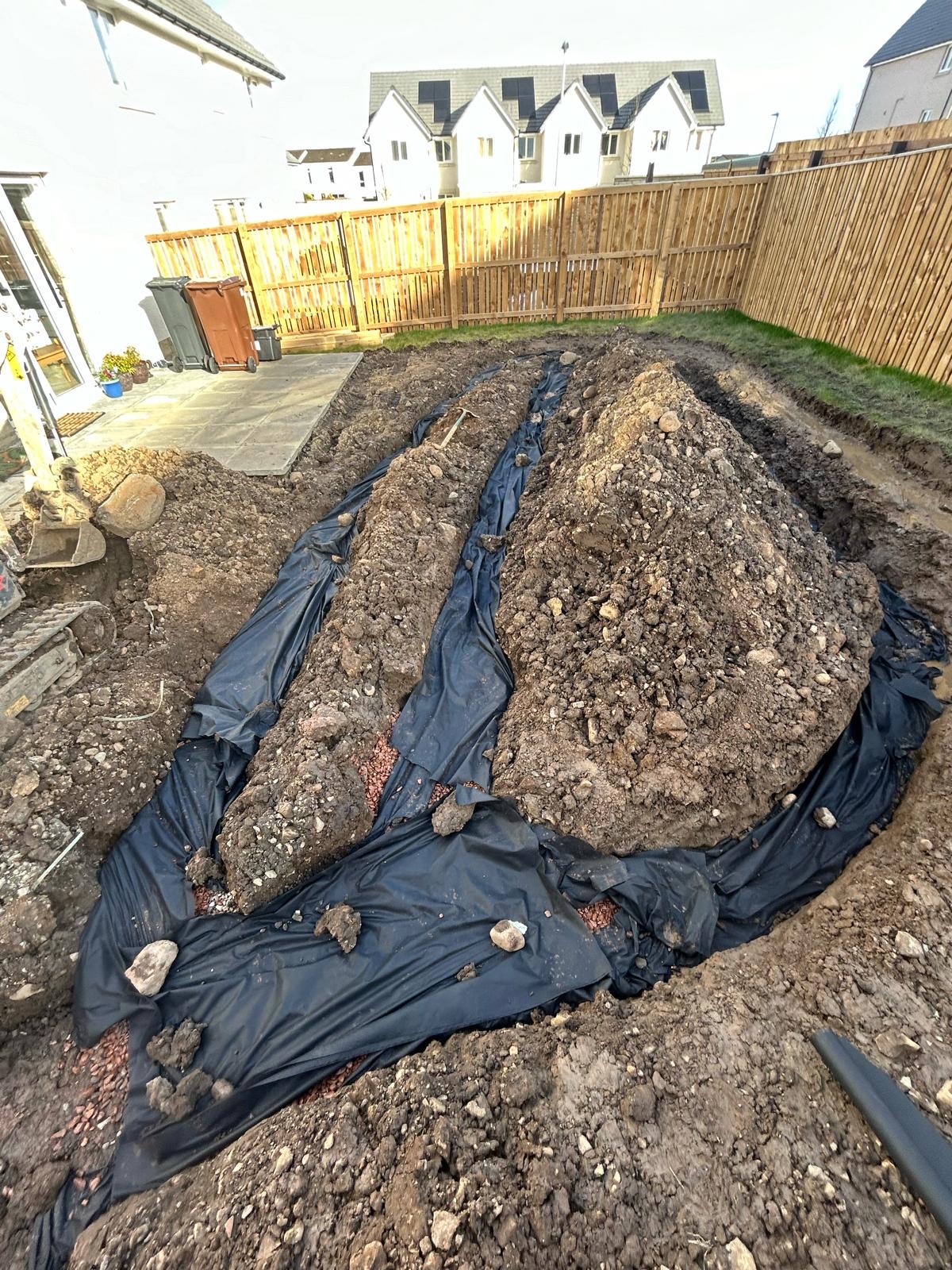
French Drains for Clay Soil Sites
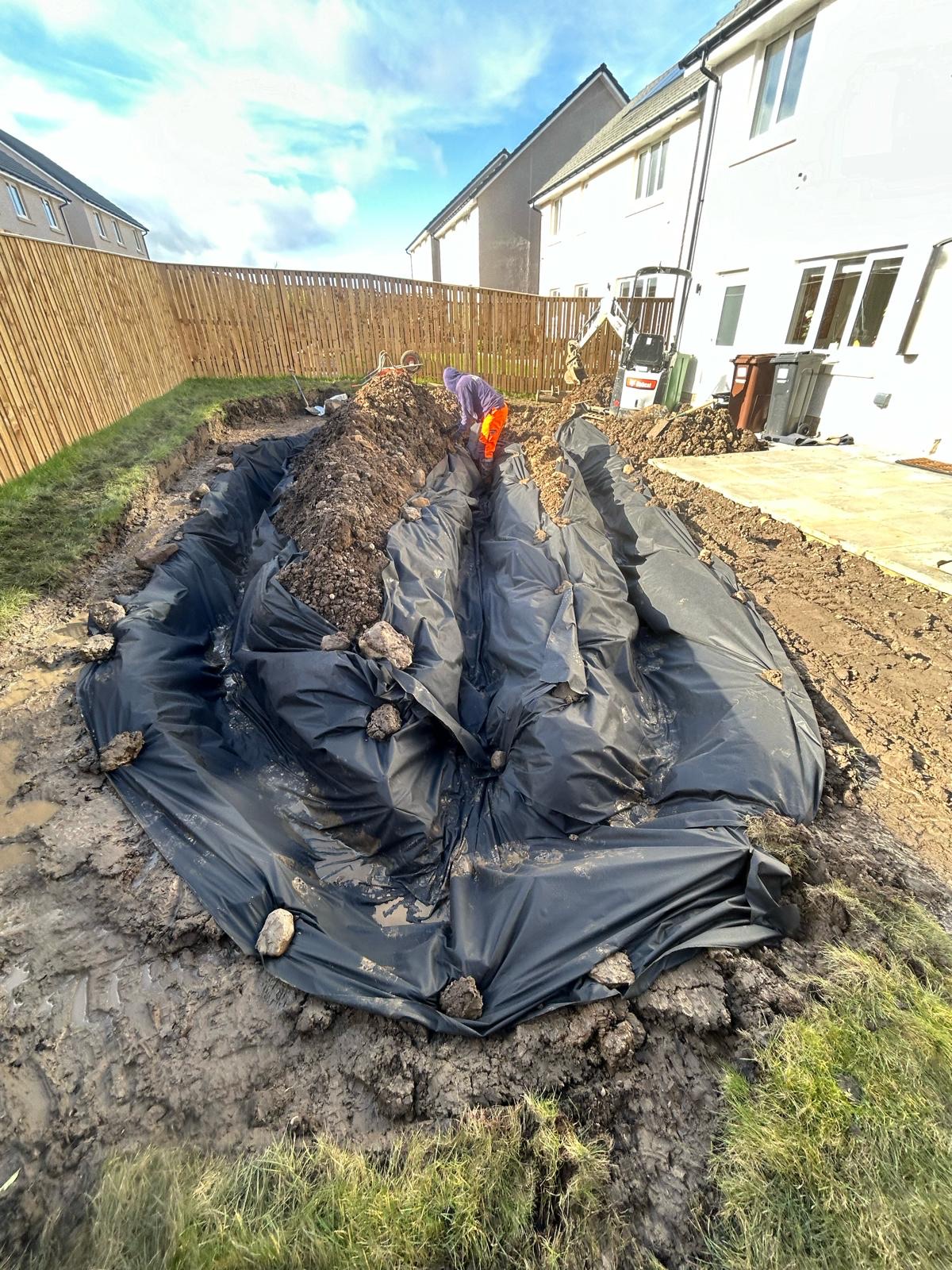
French drains provide essential escape routes for water accumulated in sub-base on clay soil sites. These gravel-filled trenches collect water from artificial grass perimeter directing it to soakaways or main drainage:
- Trench Specifications: 300mm wide × 300-400mm deep trenches around perimeter
- Perforated Pipe: 100-110mm perforated land drain pipe collecting subsurface water
- Aggregate Fill: 20mm clean gravel surrounding pipe facilitating water entry
- Geotextile Wrapping: Entire trench wrapped preventing silt contamination
- Connection: Direct to soakaway or main drainage minimum 5 metres from buildings
Downpipes and Surface Water Management
Roof water from downpipes delivers concentrated flow overwhelming artificial grass drainage. Scottish properties typically discharge 20-40 litres per minute during heavy rainfall—equivalent to saturating 1m² of artificial grass area. Proper downpipe management essential preventing localized waterlogging.
Why Downpipes Cause Drainage Problems
Traditional downpipes discharge directly at ground level—often onto artificial grass areas. This creates:
- Concentrated Flow: 20-40 litres/minute overwhelming local drainage capacity
- Sub-Base Saturation: Water accumulates in sub-base faster than it can drain
- Surface Flooding: Persistent wet patches at downpipe discharge points
- Edge Deterioration: Concentrated water flow undermines grass edges and seams
Professional Downpipe Solutions
Successful artificial grass installations manage roof water separately from surface drainage:
Downpipe Connection Options
- Direct Main Drain Connection: Ideal solution connecting downpipes directly to main drainage system
- Soakaway Installation: Purpose-built soakaway receiving roof water separate from grass area
- ACO Drain Collection: ACO channels at patio edges collecting and directing downpipe water
- Underground Piping: 100-110mm pipes transferring water from downpipes to remote drainage points
- Rainwater Harvesting: Water butts collecting roof water for garden irrigation (popular in drought periods)
Never discharge downpipes directly onto artificial grass areas—guaranteed localized waterlogging and premature failure. Underground piping costs £25-£45 per metre but essential for long-term drainage success.
Waterlogged Grass Remediation: Fixing Failed Installations
Waterlogged artificial grass requires professional assessment determining failure cause and appropriate remediation. DIY surface fixes rarely solve underlying drainage problems—proper correction addresses root causes.
Diagnosing Waterlogging Causes
Different waterlogging patterns indicate specific failure types:
- Uniform Surface Waterlogging: Indicates inadequate sub-base depth or poor artificial grass drainage rate—requires complete reinstallation
- Localized Wet Patches: Shows poor gradient or low spots—may be correctable by lifting and releveling
- Perimeter Waterlogging: Suggests lack of edge drainage or downpipe issues—install ACO drains or manage roof water
- Seasonal Waterlogging (winter only): May indicate clay soil saturation—requires French drains or enhanced drainage
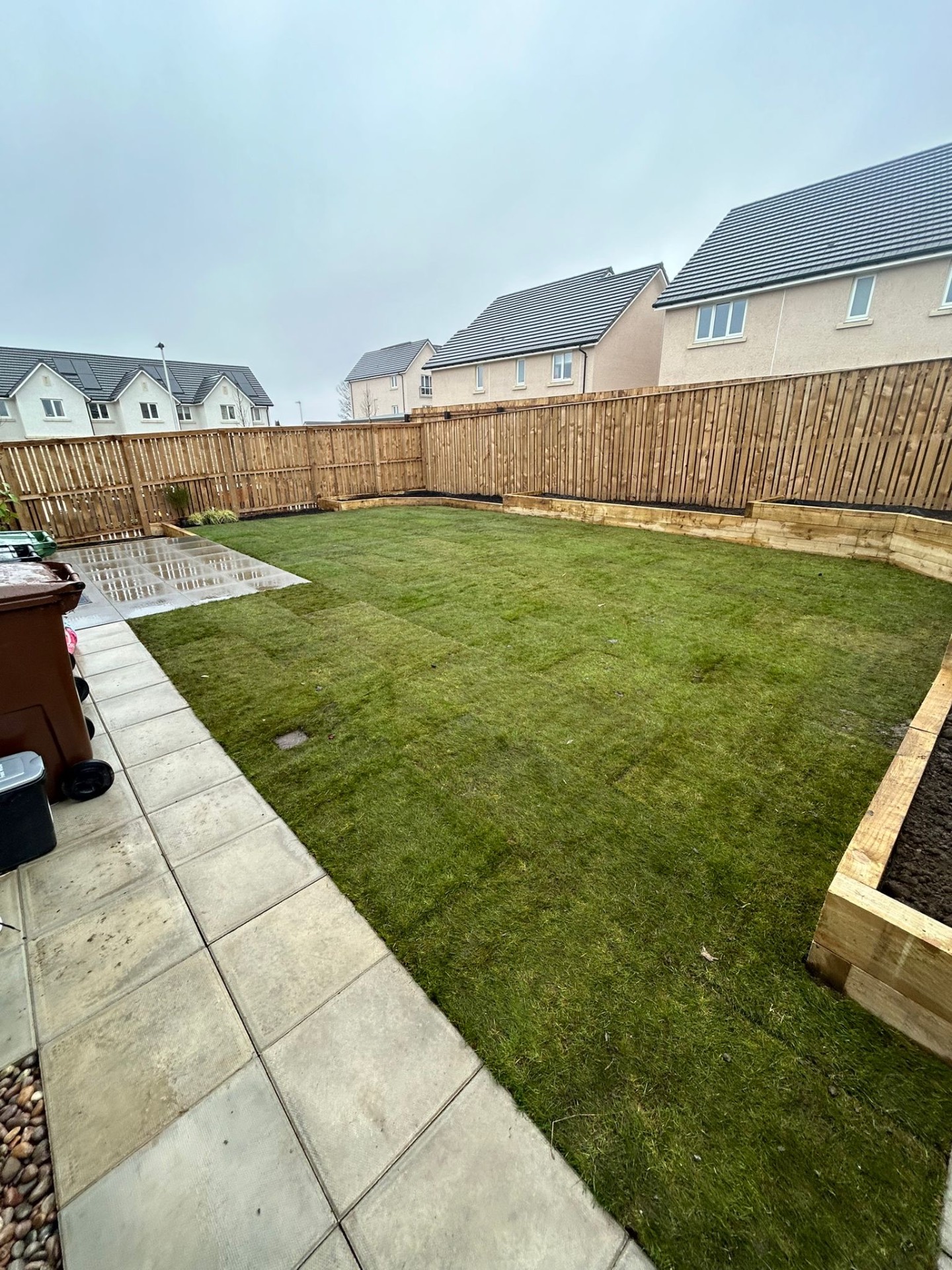
Remediation Options by Severity
Minor Issues (Localized wet patches, perimeter problems)
- Install ACO drains at problem areas (£200-£600)
- Improve surrounding gradients directing water away (£150-£400)
- Connect downpipes to drainage systems (£300-£800)
- Add perimeter French drains collecting runoff (£500-£1,200)
Moderate Problems (Partial waterlogging, slow drainage)
- Lift artificial grass, add sub-base material, compact, reinstall (£1,200-£2,500)
- Install comprehensive perimeter drainage system (£800-£1,800)
- Create soakaway connections for accumulated water (£400-£1,000)
- Improve gradients throughout installation (£600-£1,500)
Severe Waterlogging (Persistent flooding, complete drainage failure)
- Complete removal and reinstallation with proper sub-base (£2,500-£5,500)
- Clay soil solutions: enhanced excavation, French drains, soakaways (£3,500-£7,000)
- Comprehensive drainage engineering assessment and implementation (£1,000-£2,000 assessment + remediation costs)
Cost reality: Fixing failed artificial grass often costs 50-100% of original installation price. Investing in proper drainage initially (£10-£20/m² extra) prevents £2,500-£5,500 remediation expenses.
Location-Specific Drainage Challenges
Edinburgh: Volcanic Rock and Sloped Gardens
Edinburgh's volcanic rock substrate creates drainage challenges particularly on Arthur's Seat vicinity and Salisbury Crags area properties. Shallow soil over impermeable rock prevents natural percolation requiring enhanced artificial drainage. Sloped Old Town and New Town gardens need careful gradient management preventing excessive runoff speeds.
Solution: Deeper sub-base (100mm minimum), perimeter drainage collecting runoff, and terraced installations on steep slopes.
Falkirk: Heavy Clay Soil Problems
Falkirk's notorious heavy clay soil prevents water percolation causing surface flooding even with moderate rainfall. Clay contamination of sub-base materials creates drainage failure—clay particles clog Type 1 MOT voids eliminating drainage capacity.
Solution: Complete clay removal (minimum 100-125mm excavation), heavy-duty geotextile membrane preventing contamination, 100mm Type 1 MOT sub-base, and consideration for French drains or soakaways on extremely problematic sites.
South Queensferry: Coastal Exposure and Wind-Driven Rain
Coastal location experiences wind-driven rain creating unusual drainage patterns and higher effective rainfall. Salt exposure requires artificial grass with corrosion-resistant drainage components. Properties near Forth bridges face extreme weather exposure.
Solution: Premium drainage rates (40-50+ litres/m²/minute), secure edge installation preventing wind lift, and rust-resistant fixings and drainage components.
Stirling: Highest Rainfall in Central Scotland
Stirling's 1,000mm annual rainfall—50% higher than Edinburgh—demands maximum drainage specifications. Properties in exposed locations near Stirling Castle or Bridge of Allan face extreme rainfall intensity.
Solution: Premium artificial grass with 50+ litres/m²/minute drainage, 100mm sub-base depth, enhanced gradient (1:40 minimum), and professional drainage engineering assessment for problematic sites.
Signs Your Artificial Grass Has Drainage Problems
Recognize drainage failures early preventing extensive damage:
Immediate Warning Signs
- Water pooling after moderate rainfall - indicates inadequate sub-base or poor gradient
- Surface remaining wet 24+ hours after rain - shows insufficient drainage rate
- Visible puddles in specific areas - reveals uneven surface or gradient problems
- Slow drainage taking hours not minutes - indicates clogged drainage or inadequate specifications
Developing Problems
- Odor development - standing water breeds bacteria causing unpleasant smells
- Moss or algae growth - persistent moisture creates ideal conditions
- Backing deterioration - constant saturation degrades latex backing
- Settlement or subsidence - waterlogged sub-base loses stability causing surface irregularities
Preventing Drainage Failures: Professional Installation Checklist
Verify your installer follows these essential drainage steps:
Professional Drainage Installation Checklist
- ✅ Site drainage assessment identifying problematic areas
- ✅ Minimum 75mm Type 1 MOT sub-base (100mm for clay soils)
- ✅ Proper compaction using plate compactor (95%+ compaction)
- ✅ Heavy-duty geotextile membrane (minimum 100gsm)
- ✅ Minimum 1:60 gradient (preferably 1:40 to 1:50)
- ✅ Artificial grass meeting 30+ litres/m²/minute drainage (40-50+ for pets)
- ✅ Perimeter drainage where appropriate
- ✅ Post-installation drainage testing
- ✅ Comprehensive warranty covering drainage performance
Cost of Proper Drainage vs Remediation Expenses
Investment Comparison
Proper Initial Installation (40m² garden)
- Enhanced sub-base (75-100mm): £600-£1,000
- Quality geotextile membrane: £120-£180
- Premium drainage artificial grass: £320-£480 extra vs budget
- Professional gradient setting: included in installation
- Total drainage investment: £1,040-£1,660
Drainage Failure Remediation (40m² garden)
- Artificial grass removal and disposal: £400-£600
- Failed sub-base excavation: £600-£900
- Proper sub-base installation: £800-£1,200
- New artificial grass and installation: £2,200-£2,800
- Total remediation cost: £4,000-£5,500
Proper drainage costs £1,000-£1,600 preventing £4,000-£5,500 remediation expenses—saves £2,500-£4,000 plus avoids 2-3 years frustration with failed installation.
Maybury Landscapes: Drainage-Engineered Installations
Maybury Landscapes specializes in drainage-engineered artificial grass installations across Edinburgh, Stirling, Falkirk, Livingston, and Central Scotland. We understand Scottish conditions requiring:
- Site-specific drainage assessment identifying problematic areas before installation
- Enhanced sub-base specifications appropriate for Scottish rainfall and soil conditions
- Premium drainage artificial grass meeting minimum 30-40 litres/m²/minute specifications
- Professional gradient engineering ensuring effective surface water management
- Comprehensive drainage warranties guaranteeing long-term performance
Professional Drainage-Engineered Installation
Don't risk expensive drainage failures. Contact Maybury Landscapes for professional artificial grass installation with drainage engineering appropriate for Scottish conditions. Free drainage assessments, transparent specifications, and performance guarantees.
Frequently Asked Questions
What drainage rate does artificial grass need in Scotland?
Scottish artificial grass requires minimum 30-40 litres per square metre per minute drainage rate handling our 900-1,400mm annual rainfall. Standard residential installations need 30 litres/m²/minute, pet areas require 40-50 litres/m²/minute, and low-lying or problematic drainage areas demand 50+ litres/m²/minute. Budget artificial grass often drains below 20 litres/m²/minute—completely inadequate for Scottish conditions causing persistent waterlogging, odor development, and premature failure. Always verify drainage specifications before purchase—this single specification determines long-term performance more than any other factor in Scotland's wet climate.
Why does my artificial grass have standing water after rain?
Standing water indicates drainage failure from inadequate sub-base preparation, compacted sub-base preventing percolation, insufficient artificial grass drainage holes, poor gradient causing water pooling in low spots, or blocked drainage from debris accumulation. Most commonly, installers skip proper sub-base installation—75-100mm compacted Type 1 MOT stone essential for Scottish conditions. Budget installations using minimal sub-base (25-30mm) or incorrectly compacted materials cause inevitable waterlogging. Professional remediation requires excavating failed installation, installing proper drainage sub-base, ensuring correct gradients, and reinstalling with quality artificial grass meeting drainage specifications.
Can I install artificial grass on clay soil without drainage problems?
Yes, but requires enhanced drainage solutions addressing clay's impermeability. Clay soil (common across Falkirk, parts of Edinburgh, and Central Scotland) prevents water percolation causing surface flooding. Essential requirements: excavate minimum 100-125mm depth removing clay layer, install geotextile membrane preventing clay contamination, create 75-100mm Type 1 MOT sub-base providing drainage capacity, ensure minimum 1:60 gradient (preferably 1:40) directing water away, and consider perimeter drainage channels collecting runoff. Some extremely problematic clay sites require French drains or soakaway connections. Never install artificial grass directly on clay without proper sub-base—guaranteed failure within 12-24 months.
How do I fix waterlogged artificial grass?
Fixing waterlogged artificial grass depends on failure cause and severity. Minor issues: power wash removing debris blocking drainage holes, improve surrounding area gradients directing water away, and install perimeter drainage channels intercepting surface runoff. Moderate problems: lift artificial grass edges, add additional sub-base material improving drainage, compact properly, and reinstall with better edge drainage. Severe waterlogging: complete removal and reinstallation with proper 75-100mm Type 1 MOT sub-base, geotextile membrane, correct gradients, and quality artificial grass meeting drainage specifications. Attempting surface fixes without addressing sub-base causes provides temporary relief at best—properly addressing drainage requires professional remediation.
What is the correct sub-base for artificial grass in Scotland?
Scottish artificial grass requires 75-100mm compacted Type 1 MOT stone sub-base providing drainage capacity and structural stability. Type 1 MOT contains graded aggregates (0-40mm) compacting to dense, stable base while maintaining voids facilitating water percolation. Installation process: excavate to appropriate depth, install heavy-duty geotextile membrane, place Type 1 MOT in 50mm layers, compact each layer using plate compactor (95%+ compaction), create minimum 1:60 gradient, and top with 25-30mm sharp sand blinding layer. Budget installers skip compaction or use inadequate depths causing settlement and drainage failure. Proper sub-base installation costs £15-£25/m² but essential for Scottish conditions—attempting cheaper shortcuts guarantees expensive problems.
Does artificial grass need drainage holes?
Yes, quality artificial grass features drainage holes throughout backing allowing water flowing through to sub-base. Standard spacing: 8-12 holes per square metre for residential applications, 15-20 holes per square metre for high-drainage requirements (pets, heavy rainfall areas). Budget artificial grass often has inadequate hole spacing or punched holes that close during installation causing poor drainage. Premium products use laser-cut drainage perforations remaining open. Drainage hole spacing affects overall drainage rate—grass claiming 40 litres/m²/minute drainage with only 6 holes per square metre cannot achieve specification. Verify both drainage rate AND hole density when purchasing.
Should artificial grass have a gradient for drainage?
Absolutely essential in Scottish conditions. Minimum gradient 1:60 (1.67% slope) required directing water away from buildings and preventing pooling. Ideal gradient 1:40 to 1:50 (2-2.5% slope) provides optimal drainage without creating running difficulties or appearing obviously sloped. Installations without proper gradient cause water pooling in low spots regardless of sub-base quality. Professional installers use laser levels ensuring consistent gradients across entire installation. Common mistake: installers follow existing ground levels rather than creating proper drainage gradients. For larger areas (over 50m²), consider multiple drainage falls directing water toward perimeter collection points preventing excessive water accumulation.
What drainage problems occur in Edinburgh and Central Scotland artificial grass?
Scottish artificial grass faces unique drainage challenges from extreme rainfall (Edinburgh 680mm, Stirling 1,000mm, Falkirk 850mm annually), heavy clay soils (especially Falkirk, parts of Livingston, Bathgate), short intense rainfall events overwhelming inadequate drainage, freeze-thaw cycles affecting sub-base stability, and contaminated groundwater in former industrial areas. Most failures result from using English or southern UK installation standards inadequate for Scottish conditions. Edinburgh's volcanic rock substrate requires different approach than Falkirk's clay or coastal areas' sandy soils. Professional Scottish installers understand regional soil conditions and adjust sub-base specifications accordingly—generic installations from non-local installers frequently fail.
How long does artificial grass drainage last before maintenance needed?
Properly installed artificial grass drainage requires minimal maintenance lasting 15-20+ years. Annual maintenance: power wash removing accumulated debris from drainage holes (autumn after leaf fall), brush pile restoring drainage efficiency, check perimeter drainage channels clearing blockages, and verify gradients remain effective (settlement occasionally occurs). Signs requiring attention: water pooling after moderate rainfall, slow drainage taking hours rather than minutes, surface remaining wet 24+ hours after rain, or odor development (indicates standing water). Professional installations with proper sub-base rarely develop drainage problems—budget installations using inadequate materials often fail within 3-5 years requiring expensive remediation or complete replacement.
Can I improve drainage on existing artificial grass?
Limited improvements possible depending on installation quality. Surface solutions: power wash removing debris blocking holes, improve surrounding gradients directing water away, install perimeter drainage channels intercepting runoff, and add additional drainage holes using specialized tools (risky—can damage backing). These provide minor improvements only. Structural drainage problems require lifting artificial grass, improving or replacing sub-base, correcting gradients, and reinstalling properly. Most waterlogging results from inadequate sub-base—surface modifications cannot fix foundational problems. If your artificial grass experiences persistent waterlogging, budget for professional assessment and potential reinstallation. Attempting DIY fixes without addressing root causes wastes time and money.