Patio Installation Guide: How It's Done Properly in Scotland
Most failed patios fail in the part you can't see — the sub-base. This is the full Maybury method, built to BS 7533 and refined over 60+ Scottish installs, so you can specify, commission or just understand what a properly installed patio actually involves from excavation to final brush-in pointing.
Stage 1 — Excavation & Sub-Base
Strip topsoil and excavate to 200 mm minimum below finished slab level. In Edinburgh's clay subsoils we frequently dig deeper to remove soft spots. Lay terram membrane on the formation, then 150 mm of MOT Type 1 in two 75 mm lifts, each whacker-compacted to refusal. Skipping the membrane or compacting in a single lift is the #1 reason patios sink within 2 winters.
Stage 2 — Edge Restraints & Falls
Edge restraints (concrete haunching against a permanent wall, or installed kerb edge to open sides) lock the patio in place. Without them, the perimeter slabs slowly migrate and jointing fails. Set a clear cross-fall — minimum 1:80 (12.5 mm per metre) — away from all building elevations. Falls are non-negotiable in Scotland; standing water at freeze-thaw destroys jointing in a single winter.
Stage 3 — Bedding & Laying
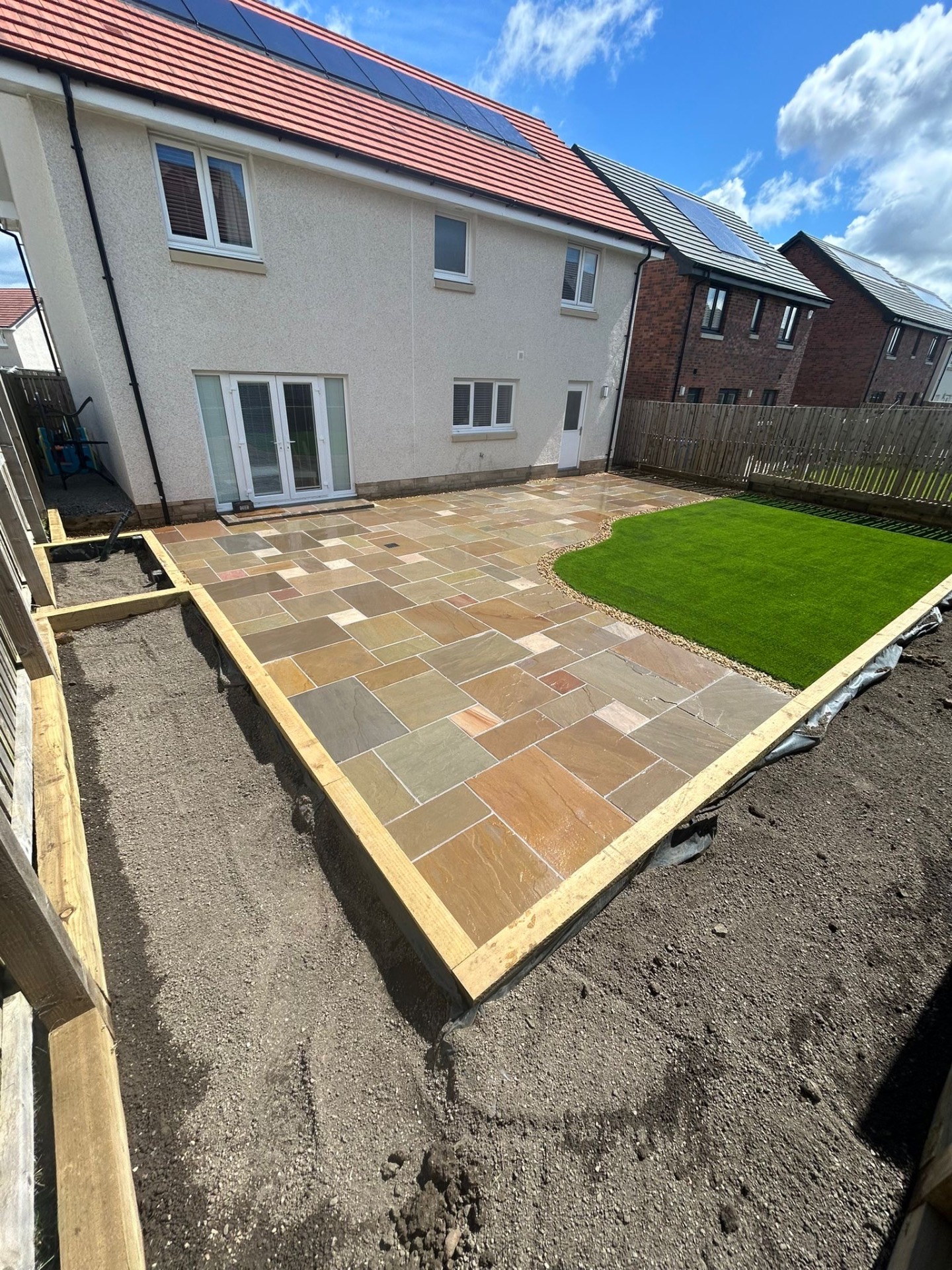
Slabs are laid on a full 50 mm wet mortar bed (5:1 sharp sand to cement, primer slurry applied to the back of porcelain). Spot-bedding (the "five blob" method) is the other major killer of Scottish patios — it traps water under each slab, freezes, and lifts within 18 months. Every Maybury slab is fully bedded. Joints are kept consistent (typically 5 mm porcelain, 8–10 mm sandstone) using spacers throughout.
Stage 4 — Pointing
We use proprietary brush-in jointing compounds (Geo-Fix, Romex or similar) for every patio. Cement-pointed joints crack in Scottish freeze-thaw within 3 winters. Brush-in compounds remain flexible, weed-resistant and easily refreshed if ever needed. Apply on a dry day, brush diagonally, soak with a fine spray, and tamp to a consistent finish.
Stage 5 — Drainage Tie-In
Where falls run toward the house or a paved area abuts an existing surface, an aco-drain channel is installed and connected either to an existing soakaway or to a new permeable area. SuDS (Sustainable Urban Drainage) requirements apply to new front patios that exceed 5 m² and discharge to highway. We size every drainage component to BS EN 752.
Choosing Your Material
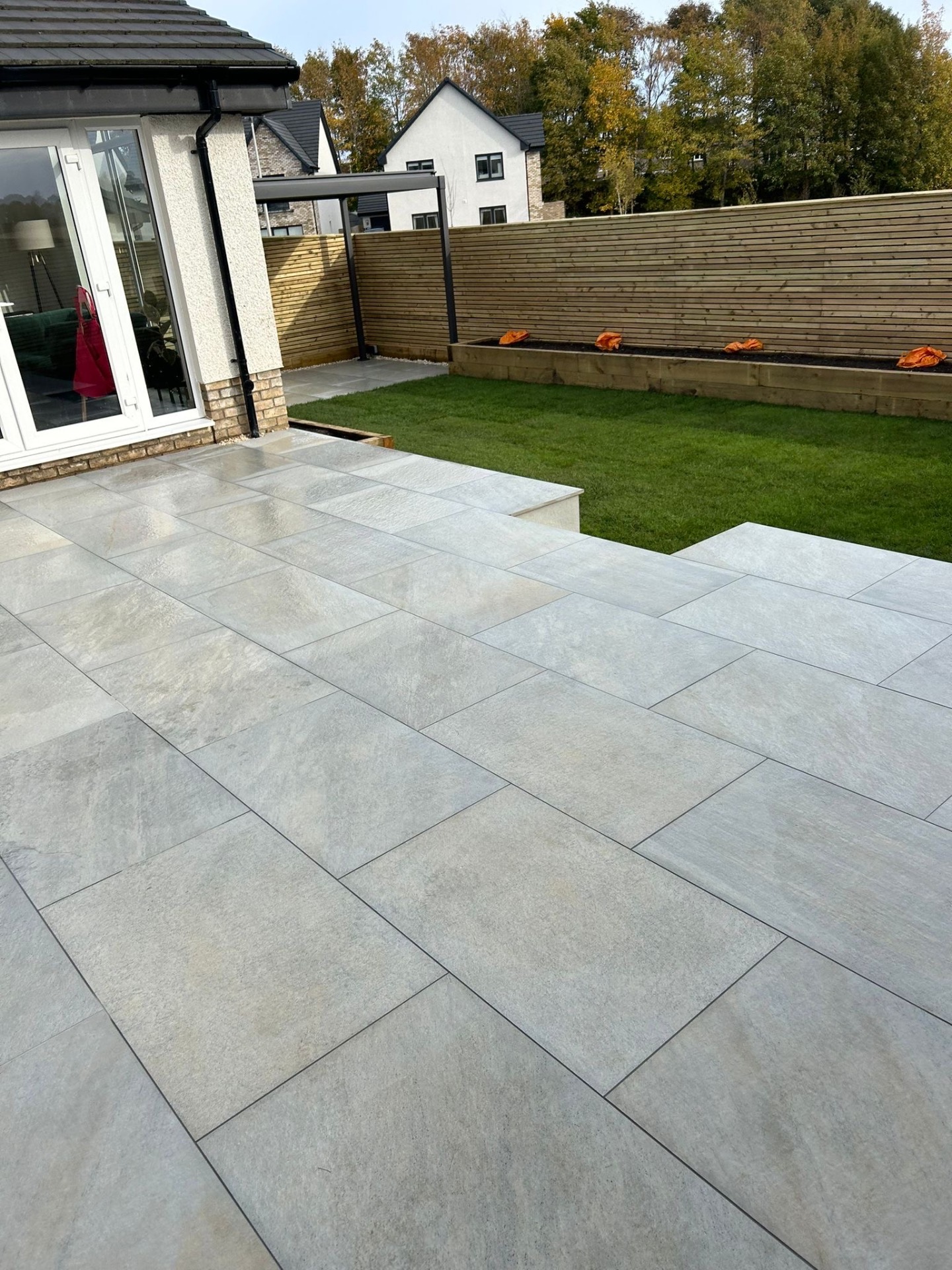
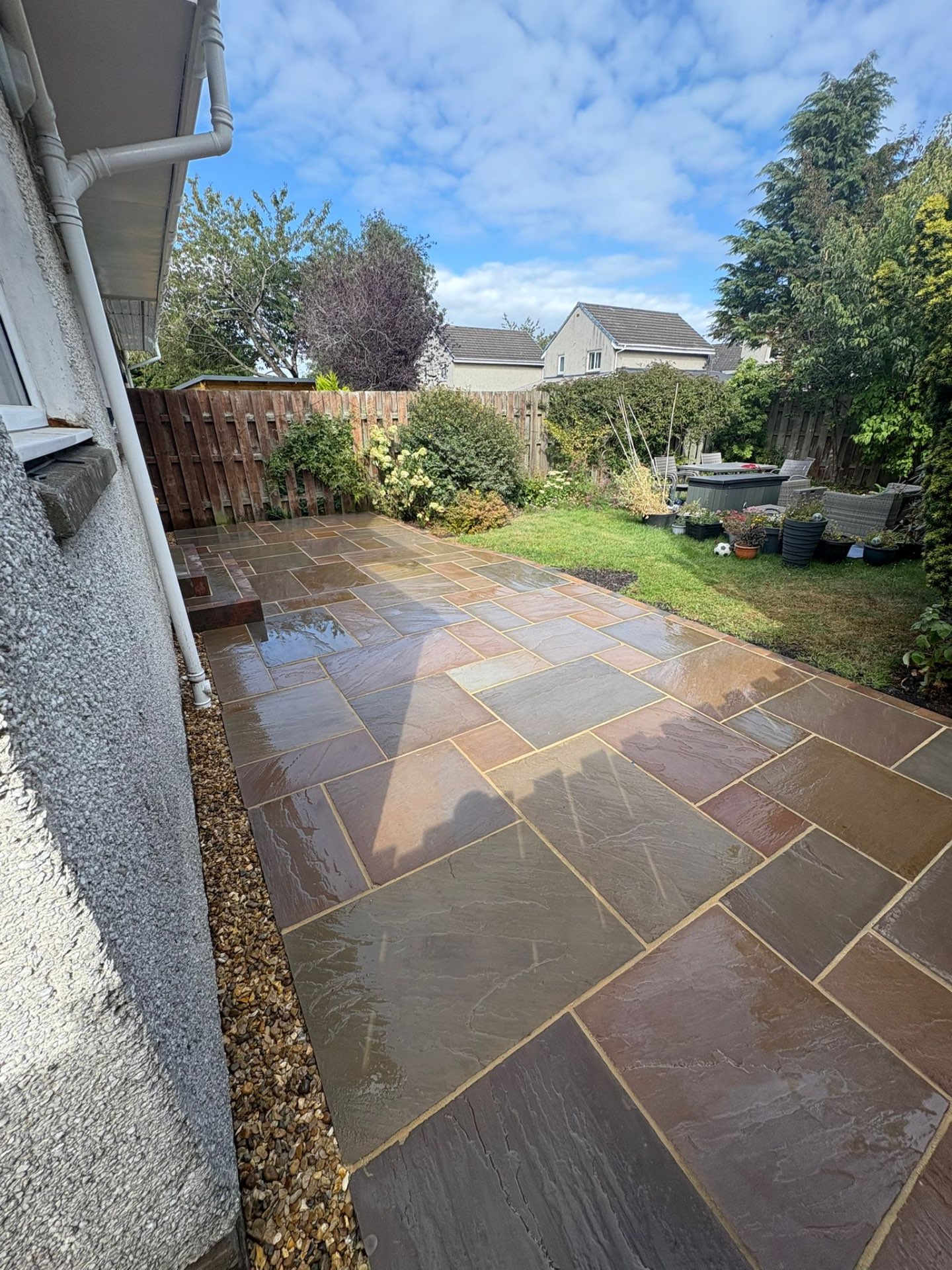
Porcelain is the gold standard for Scottish patios — R11 anti-slip, frost-proof, mossless, zero-maintenance. Indian sandstone remains the best value premium look but requires sealing every 2–3 years. Tobermore Mayfair Flag and Bradstone Aspero are proven manufactured options. Avoid limestone, unsealed travertine and anything sold as "natural stone tile" without a thickness above 20 mm.
Frequently Asked Questions
How is a patio installed correctly in Scotland?
A correctly installed Scottish patio follows BS 7533: excavate to 200 mm minimum depth, lay 150 mm compacted MOT Type 1 sub-base in two 75 mm layers, install edge restraints, lay slabs on a full 50 mm wet mortar bed (5:1 sharp sand to cement) — never spot-bedded — point with proprietary brush-in jointing compound, and finish with a minimum 1:80 cross-fall away from the house. Skipping any one step shortens the patio life by years.
How long does a patio installation take?
A typical 30–50 m² rear-garden patio takes 5–8 working days on site: 1 day for excavation and muck-away, 1 day for sub-base preparation and compaction, 2–4 days laying and pointing depending on cuts and complexity, 1 day for finishing, drainage tie-in and clean-up. Larger or sloped patios with retaining elements can take 10–14 days. Maybury slot times are typically booked 6–10 weeks ahead.
What is the best patio material for Scottish weather?
Porcelain (R11 anti-slip rated) is the most reliable choice — frost-proof, stain-proof, mossless, and zero maintenance. Indian sandstone is a beautiful and value-engineered alternative but requires sealing every 2–3 years to resist Scottish freeze-thaw cycles. Avoid limestone (too porous), and avoid any unsealed natural stone if the patio is north-facing or shaded — moss will dominate within 18 months.
Do I need planning permission for a patio?
No — patios are permitted development in Scotland provided they do not exceed 50% of the curtilage of the property and use a permeable surface or drain to a permeable area. Listed buildings, conservation areas (e.g. Edinburgh New Town, Stockbridge) and properties in National Scenic Areas have additional restrictions. Always check with your local council before starting if you are in any doubt.
How much does professional patio installation cost?
In Edinburgh and Central Scotland, expect £210–£280 per m² for Indian sandstone, £260–£330 per m² for premium sandstone, and £340–£480 per m² for porcelain — all installed, fully VAT-inclusive, and including sub-base, edging, jointing and labour. A typical 40 m² rear-garden sandstone patio lands £8,400–£11,200 turnkey. New-build properties under 3 years old qualify for 0% VAT.
Get a Properly Specified Patio Quote
Free site visits across Edinburgh, West Lothian, Falkirk and Stirling. 5★ rated, 60+ reviews, 10-year guarantee.
Call 0800 644 0131