Landscaping Ideas for Edinburgh Gardens: Designs That Actually Work
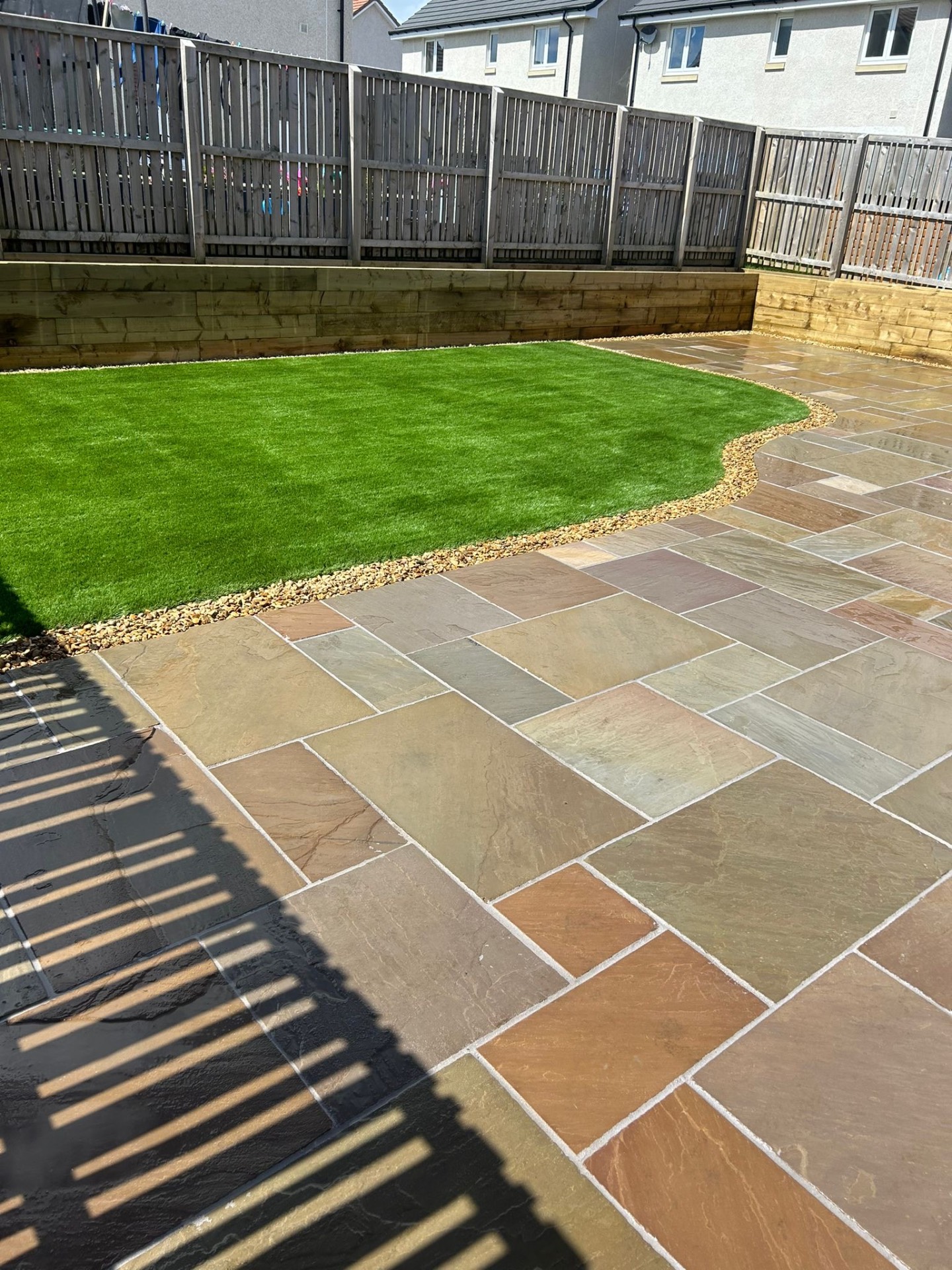
Edinburgh gardens are unique. Tenement courtyards, terrace strips, sloping New Town plots and exposed Cramond and Barnton plots all need different solutions — and all share the same enemies: frost, clay, wind and 660 mm of annual rainfall. These are the design ideas we keep coming back to because they actually survive a Scottish winter.
Idea 1 — The "60/25/15" Small Garden Layout
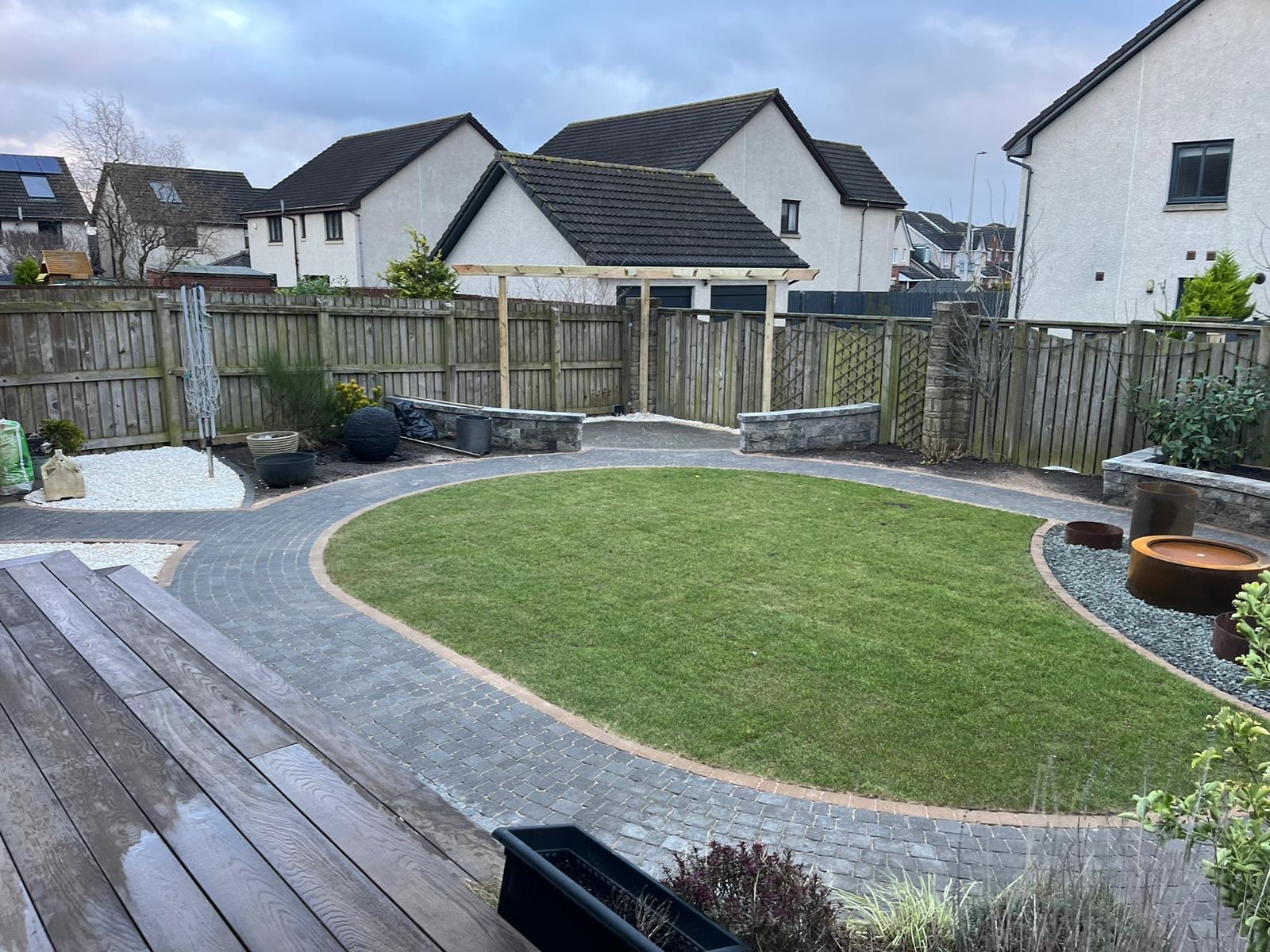
Most Edinburgh rear gardens are 30–60 m². Fragmented layouts (small lawn, small patio, small bed, small shed) feel cramped because each zone is too small to function. The winning formula is 60% paving, 25% artificial grass or single planted strip, 15% raised bed or specimen feature. One large patio that genuinely seats 6 outperforms three undersized zones every time.
Idea 2 — Structured "Neat Naturalism" Planting
Cottage borders fail in Edinburgh — too much wind, too much rain, too much winter dieback. The current best-in-class approach is structured naturalism: 60–70% evergreen backbone (Pittosporum tobira, low Hebes, Skimmia), 20% ornamental grasses for movement (Stipa Tenuissima, Calamagrostis Karl Foerster), 10% seasonal hero plant (Hydrangea Annabelle, Verbena Bonariensis). Looks structured in February, romantic in July.
Idea 3 — Lighting as Architecture
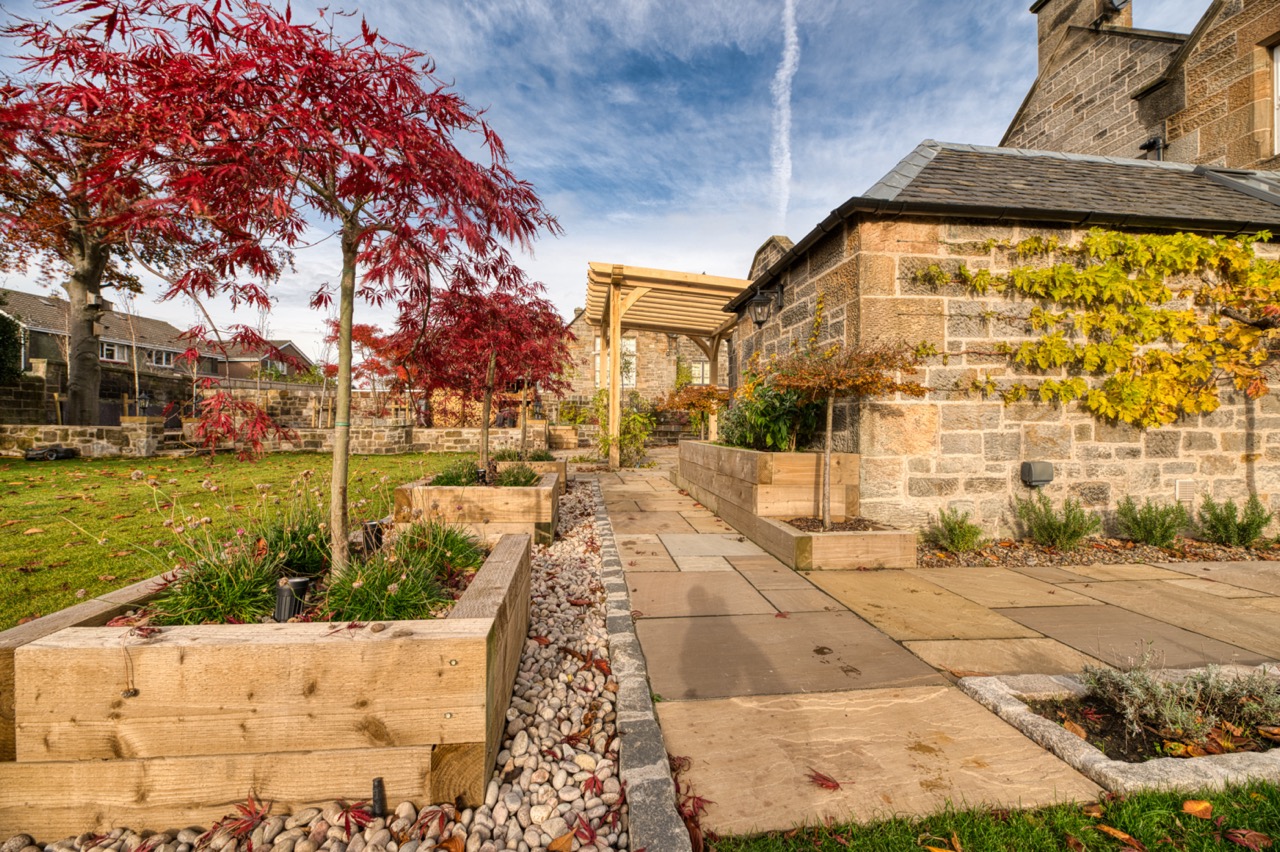
Edinburgh is in active garden-use light from roughly 4 pm December to 11 pm June. Low-voltage integrated lighting transforms how long you actually use the garden each year. Recessed uplights into the patio, downlights under pergolas, and graze-lighting on textured walls cost £1,200–£2,400 added to a typical project and pay back in usable evenings every season.
Idea 4 — A Destination at the Far End
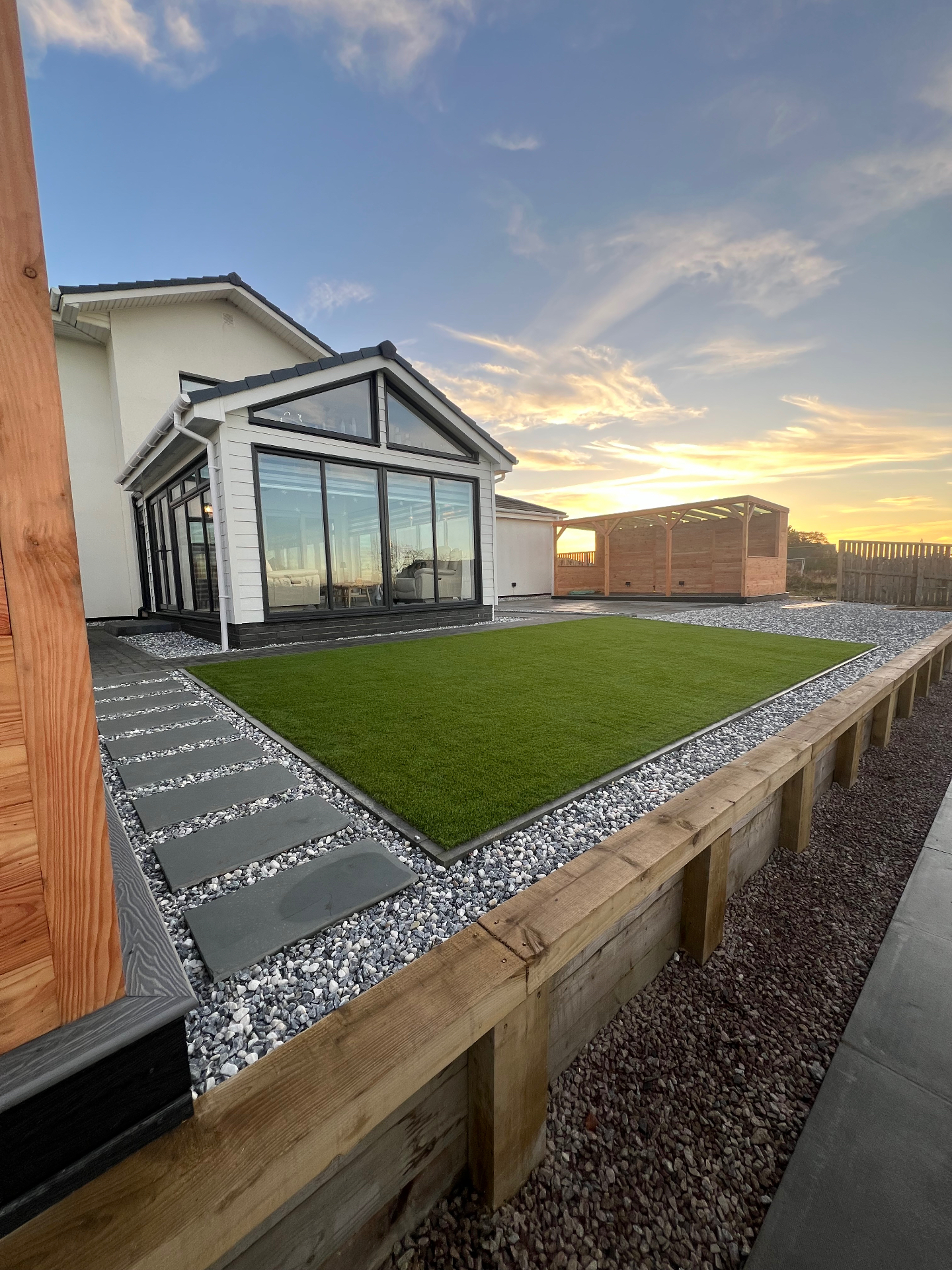
Long, narrow Edinburgh gardens (Bruntsfield, Marchmont, Newington terrace gardens) work best with a clear destination at the back: a pergola, garden room, firepit or composite deck platform. This pulls the eye down the garden, makes the plot feel longer, and gives you a reason to walk to the end rather than just stepping out the kitchen door.
Idea 5 — Multi-Level Decking on Slopes
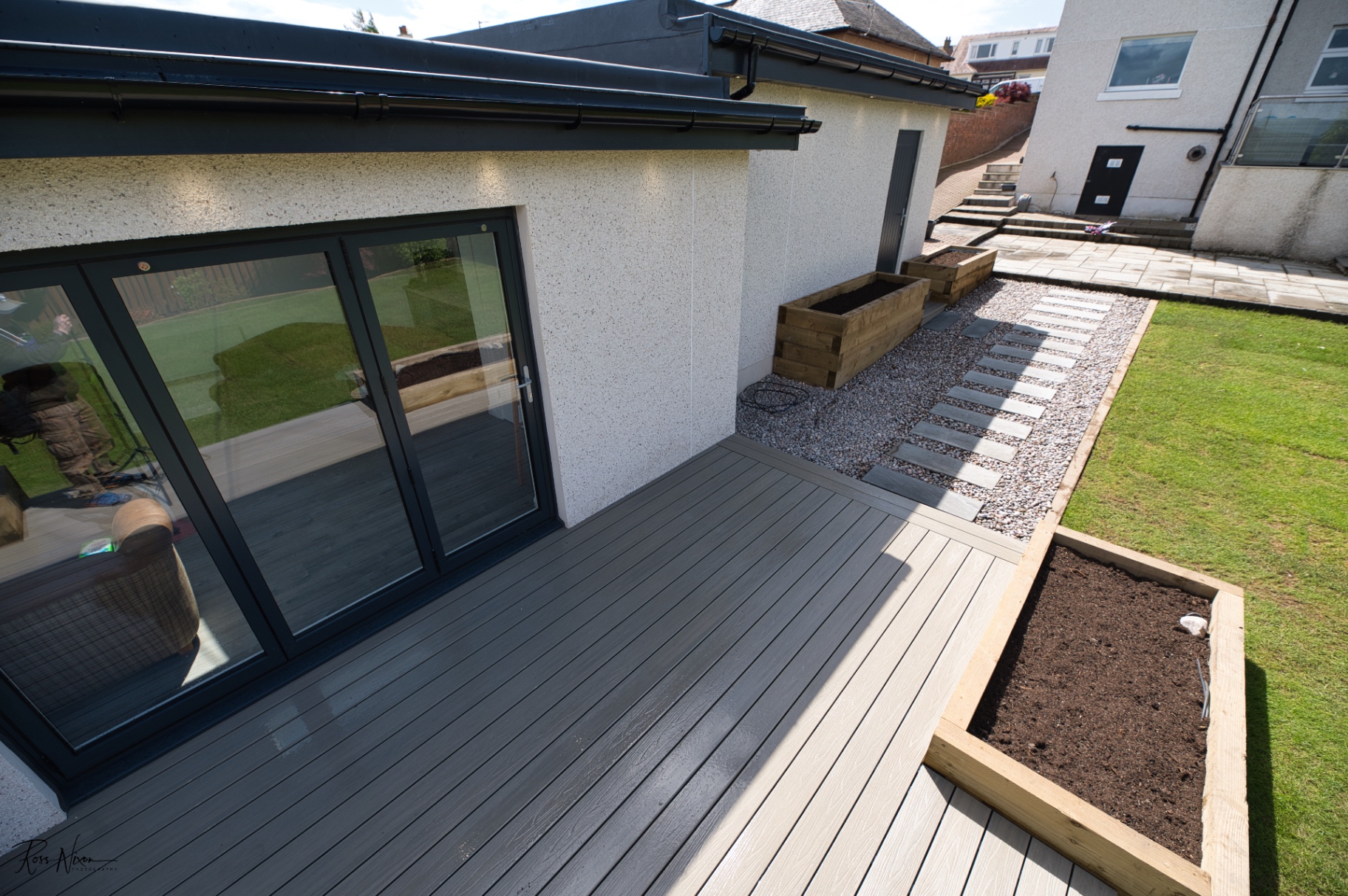
Many Morningside, Merchiston and Trinity gardens drop sharply from the house. Rather than fight the slope with retaining walls, embrace it with multi-level composite decking. Two or three platforms at differing levels create distinct zones (dining, lounging, planting), turn an awkward fall into the garden's signature feature, and cost less than equivalent earthworks plus paving.
Idea 6 — Garden Rooms for Year-Round Use
Edinburgh has roughly 80 fully usable outdoor days per year. A properly insulated garden room (50 mm SIP panels, double glazing, electric heating) lifts that to 365. Used as a home office, gym or snug, it adds the highest perceived value of any garden feature on resale and extends usable square footage of the property.
Frequently Asked Questions
What landscaping works best in small Edinburgh gardens?
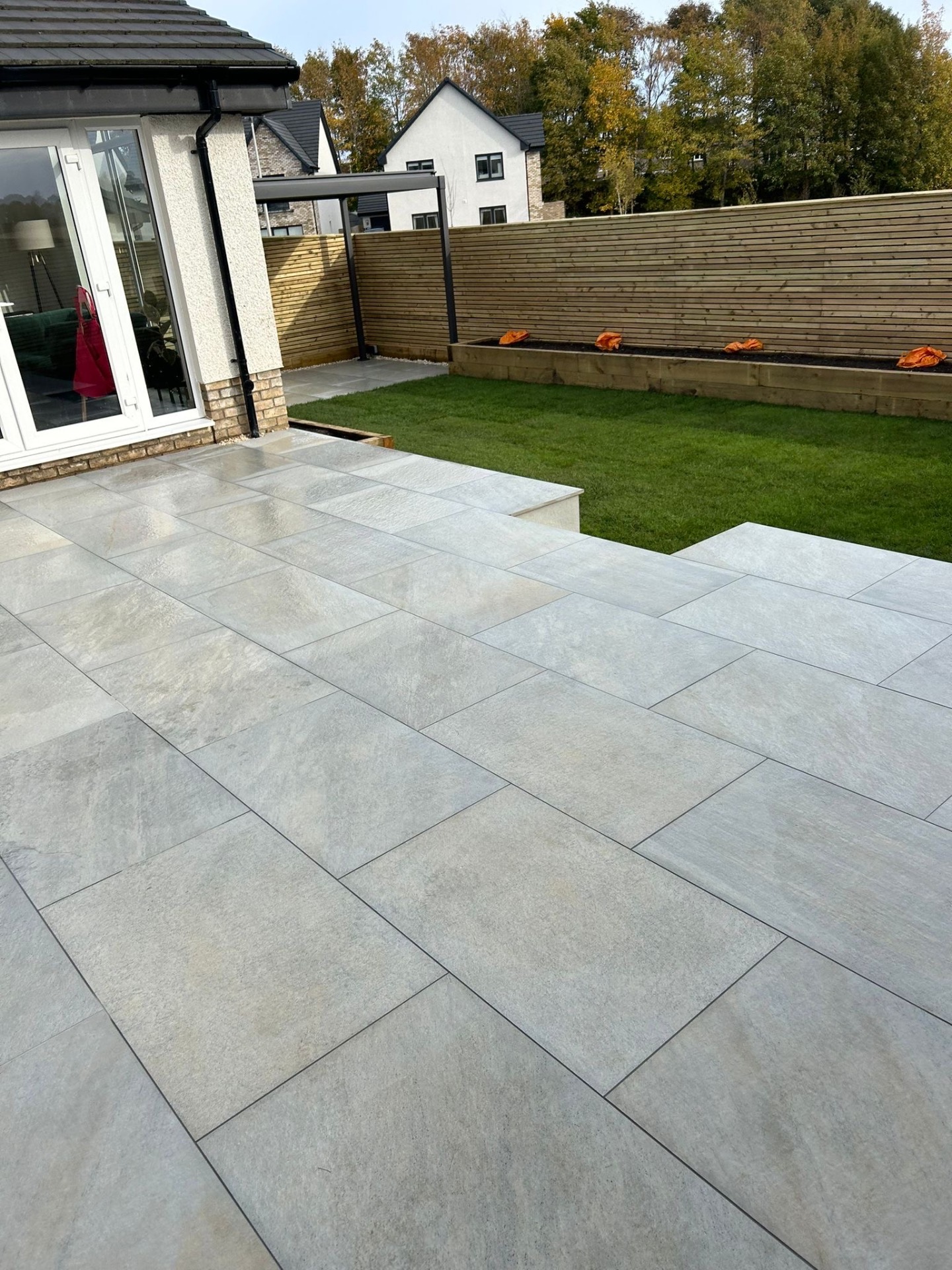
For typical 30–60 m² Edinburgh tenement and terrace rear gardens, the highest-impact combination is a porcelain or buff sandstone patio (60% of the garden footprint), an artificial grass strip (25%), and a single specimen tree with structured raised beds (15%). This eliminates mowing in awkward corners, provides year-round usable space, and works in low-light New Town/Marchmont aspects.
How can I make my Edinburgh garden look bigger?
Three proven techniques: (1) lay paving lines to run away from the house — diagonal or longitudinal layouts visually extend the space; (2) use a single material (porcelain or sandstone) right to the boundaries rather than breaking the garden into compartments; (3) add a destination feature at the far end (pergola, water feature, garden room) to draw the eye and create perceived depth. Avoid fussy curved borders that fragment small spaces.
What is the most modern landscaping trend in Edinburgh?
In 2026 the dominant trends in Edinburgh are: large-format porcelain paving (900×600 mm), warm-grey composite decking, garden rooms with full glazing, integrated low-voltage lighting on every project, and structured planting using Scottish-resilient species like Pittosporum, Hydrangea Annabelle and grasses such as Stipa Tenuissima. The "neat naturalism" look has largely replaced traditional cottage borders.
Do Edinburgh gardens need different landscaping than the rest of the UK?
Yes. Edinburgh gardens contend with frost (60+ days a year), heavy clay subsoil, high rainfall (660 mm) and significant wind exposure on north and west aspects. This means R11 anti-slip paving, frost-rated sub-base depth (150 mm Type 1 minimum), structured drainage on every project, and wind-tolerant plant selection. Designs lifted from southern UK guides regularly fail here within 3 winters.
How long does an Edinburgh garden makeover take?
A typical 60–80 m² rear-garden transformation takes 8–14 working days on site, weather permitting. Allow 2–3 weeks for design and material lead-times beforehand (porcelain typically 10–14 days; bespoke pergolas 3–4 weeks). Maybury build slots fill 6–10 weeks in advance, especially for spring and early summer starts.
Bring Your Edinburgh Garden Idea to Life
Free design consultations across Edinburgh and the Lothians. 5★ rated, 60+ reviews, 10-year guarantee.
Call 0800 644 0131