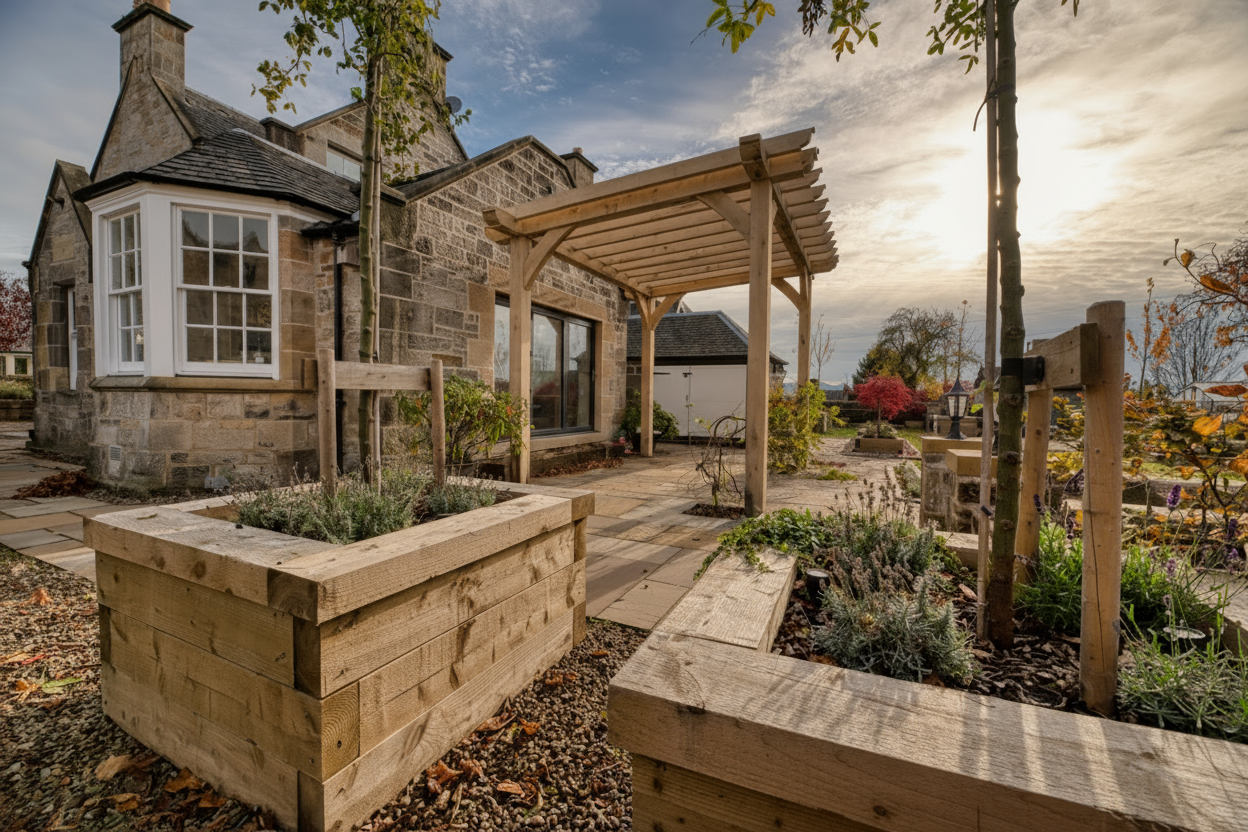
Garden Lighting Installation Edinburgh, Stirling, Falkirk: Year-Round Outdoor Living with Professional Electrical Services
Transform your Scottish garden into a year-round sanctuary with professional lighting installation. From fire pit integration to underground electrical cabling, we've completed 200+ installations across Edinburgh, Stirling, and Falkirk.
Scottish homeowners face a frustrating reality: for nearly six months of the year, their gardens sit unused in darkness. From October through March, sunset arrives by 4-5pm, relegating beautiful outdoor spaces to summer-only use. But professional garden lighting changes everything.
Strategic lighting extends your garden's usability year-round, adds security and safety, and can increase property value by £3,000-£8,000 in Edinburgh and Stirling markets. When integrated with features like handcrafted fire pit bowls and weather-resistant seating areas, your garden becomes a genuine year-round living space - not just a seasonal luxury.
At Maybury Landscaping, we've installed over 200 garden lighting systems across Central Scotland. Our extensive experience laying underground utilities - gained through years of drainage, patio, and driveway installations - means we understand Scottish soil conditions, weather challenges, and how to route cables without compromising existing landscaping or future garden work.
Ready to transform your outdoor space?
Free garden lighting consultation across Edinburgh, Livingston, Falkirk, Stirling, and all surrounding areas.
Get Your Free QuoteWhy Garden Lighting is Essential in Scotland (October-March)
Scotland's dramatic seasonal daylight variation creates a compelling case for garden lighting. In December, Edinburgh experiences just 7 hours of daylight compared to 17 hours in June - a staggering 10-hour difference. For working families, this means your garden is dark when you leave for work and dark when you return home.
Without lighting, gardens across Stirling, Falkirk, and Edinburgh sit completely unused for 5-6 months annually. You've invested thousands in landscaping - patios, driveways, raised beds, pergolas - yet they deliver value only half the year. Professional lighting fundamentally changes this equation.
Safety Benefits
- • Illuminated paths prevent trips and falls in Edinburgh's wet conditions
- • Step lighting crucial for sloped Stirling properties
- • Boundary definition prevents garden edge accidents
- • Reduced liability for homeowners hosting guests
Security Advantages
- • Motion-activated lighting deters intruders
- • Dark corners eliminated around Falkirk properties
- • Integration with CCTV systems enhances surveillance
- • Occupied appearance when you're away
Beyond practical benefits, quality garden lighting significantly impacts property value. Edinburgh estate agents report that professional outdoor lighting adds £3,000-£8,000 to asking prices, with particularly strong impact in competitive markets like Linlithgow and Dunfermline. Buyers increasingly expect turnkey outdoor spaces, and lighting demonstrates a well-maintained property while extending perceived living area.
There's also a mental health dimension often overlooked. Seasonal Affective Disorder affects many Scots during our long, dark winters. Access to illuminated outdoor space - even for 15-20 minutes of fresh air - provides therapeutic benefits. Combining lighting with fire pit installations creates inviting spaces that encourage outdoor time year-round, combating winter isolation.
Professional Garden Electrical Installation Services
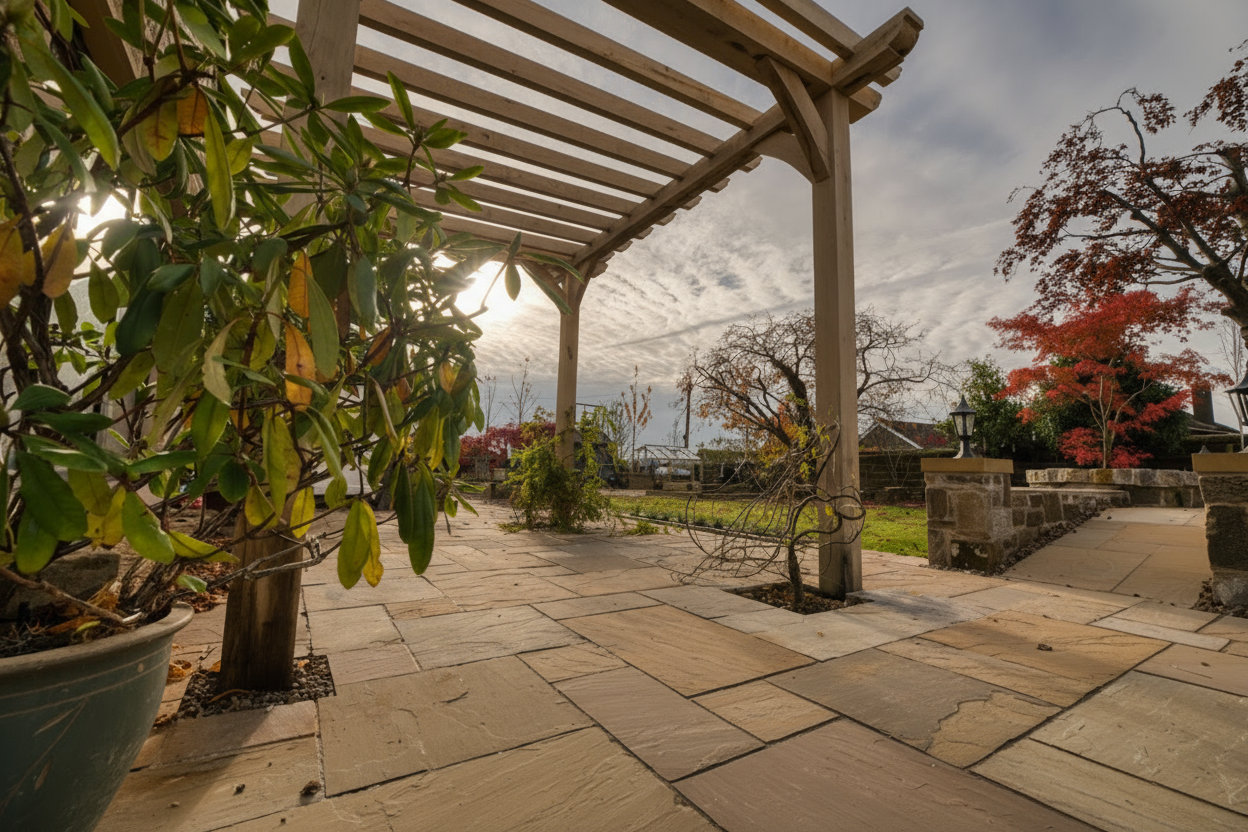
Underground Cable Installation
Proper underground cable installation separates professional installations from problematic DIY attempts. We exclusively use SWA (Steel Wire Armoured) cable - the only cable type suitable for direct burial in Scottish gardens. This heavy-duty cable features steel wire armor between the outer sheath and inner conductors, protecting against accidental damage from garden work, ground movement, and moisture ingress.
Cable depth matters enormously for long-term reliability and safety. We install at 600mm minimum depth - well below normal digging depth for planting or garden maintenance. This exceeds Building Regulations requirements and provides peace of mind. In Falkirk's heavy clay soil, we use specialized excavation techniques to maintain trench integrity, while Edinburgh's variable geology requires careful routing to avoid rock formations.
We install all cables within protective conduit even when using armoured cable. This future-proofs your installation - if you want to upgrade lighting or add circuits in 10 years, we can pull new cable through existing conduit without re-excavating your garden. This is particularly valuable in mature gardens with established planting or in areas we've previously landscaped with complex drainage systems.
Our extensive utility laying experience across Central Scotland means we understand underground challenges other contractors miss. We coordinate with existing drainage (we've installed hundreds of drainage systems, so we know where water runs), avoid tree root damage that could compromise mature specimens, and maintain detailed records of cable routes for future reference. For gardens we've previously landscaped, we already have sub-surface mapping, making installation remarkably efficient.
Electrical Safety & Compliance
All garden electrical work must comply with Part P Building Regulations - this isn't optional. Non-compliant installations void home insurance, create liability issues if accidents occur, and cause complications when selling your Edinburgh, Stirling, or Falkirk property. Yet we regularly encounter problematic DIY or uncertified contractor installations lacking basic safety measures.
Proper installations require RCD (Residual Current Device) protection at 30mA sensitivity maximum - this disconnects power within 40 milliseconds if current leakage detected, preventing electrocution. All outdoor fixtures must carry minimum IP65 rating (IP67 for ground-level lights), meaning they're completely dust-tight and protected against water jets from any angle. These aren't luxuries - they're essential for Scottish weather conditions.
We hold NICEIC/SELECT certification, meaning our electricians meet rigorous competency standards and our work undergoes independent inspection. You'll receive an Electrical Installation Certificate documenting all testing - earth loop impedance, insulation resistance, polarity, and RCD operation. Keep this certificate with your property deeds; it's required when selling and proves compliant installation to insurers.
Material specifications matter as much as electrical standards. We specify 316 marine-grade stainless steel fixtures for coastal locations (Kirkcaldy, Fife coast) and exposed Stirling hilltop properties. Powder-coated aluminum suffices for more sheltered Edinburgh locations. All junction boxes are IP68-rated (submersible), all cable connections use weatherproof crimp joints with heat-shrink tubing, and all earth bonding meets 17th Edition Wiring Regulations. These details prevent the corrosion and connection failures common in substandard installations.
Transformers & Power Distribution
The heart of a low voltage lighting system is the transformer, converting 230V mains electricity to safe 12V for garden use. Transformer location matters - too far from lights creates voltage drop and dim output, too exposed risks weather damage. We typically install in garages, on external walls under weather hoods, or in IP65-rated ground boxes. Stirling properties often require wall-mounting due to space constraints, while large Edinburgh gardens may need multiple transformers for optimal power distribution.
Load calculations prevent the common mistake of undersized transformers. Each LED fixture draws 3-5 watts typically, but voltage drop across cable runs must be factored. A 150-watt transformer might power 30 fixtures theoretically, but cable resistance limits practical capacity to 20-25 fixtures depending on distances involved. We specify transformers with 20-30% overhead capacity, allowing future expansion without complete system replacement.
Distribution boxes split power to different lighting zones with individual circuit protection. This allows independent control - path lights on motion sensors, entertainment area lights on manual switches, security lights on dusk-to-dawn sensors. If one circuit develops a fault, other zones continue operating. Smart lighting systems use WiFi-enabled transformers and distribution units, providing app control and integration with Alexa, Google Home, or HomeKit for voice control and automation.
Energy efficiency has improved dramatically with LED technology. A typical 15-fixture garden lighting system draws 90-150 watts total - less than two old incandescent bulbs. Edinburgh homeowners can expect annual running costs of £30-60 based on current electricity rates and 5-hour winter evening usage. Compare this to old halogen systems at £200-350 annually. Smart timers and motion sensors reduce consumption further, while LED longevity (25,000-50,000 hours) means 15-25 years between bulb replacements - often longer than homeownership duration.
Fire Pit Lighting & Integration
Handcrafted fire pit bowls have become centerpiece features in Scottish gardens, and integrating them with professional lighting creates truly magical outdoor spaces. These aren't standard garden fire pits - they're custom-designed metalwork pieces created by skilled artisans, typically from corten steel (develops rich rust patina), stainless steel (contemporary look), or cast iron (traditional aesthetic).
Design customization is limited only by imagination. We've installed fire pits featuring geometric patterns, family crests, Celtic knots, abstract art, even custom logos for business properties in Perthshire and Auchterarder. The fire bowl becomes sculptural art during daytime, functional heating and ambiance source in evenings. Corten steel is particularly popular across Edinburgh and Stirling - it weathers to a beautiful orange-brown patina that complements Scottish sandstone and natural landscapes.
Lighting integration requires careful planning. We install perimeter lighting around seating areas at 2-3 meters from the fire pit, ensuring safe movement while maintaining ambiance. Low-level path lighting guides access routes, while uplighting nearby planting or architectural features creates depth and visual interest. The key is layering - fire provides warm central glow, perimeter lighting ensures safety, ambient lighting extends the usable space beyond immediate fire pit area.
Fire Pit Installation Costs
- • Small fire pit bowl (60cm diameter): £800-£1,200 including concrete base
- • Medium fire pit bowl (80cm diameter): £1,200-£1,800 including installation
- • Large custom fire pit (100cm+ diameter): £1,800-£2,500 with bespoke design
- • Perimeter lighting integration: £400-£800 for 6-10 lights around seating area
- • Complete fire pit zone: £2,000-£3,500 including fire pit, lighting, paving base
Material choice affects both aesthetics and longevity in Scottish weather. Corten steel develops its signature patina over 3-6 months, then remains stable for decades - we have Edinburgh installations from 2012 looking better now than when new. Stainless steel suits contemporary properties in Livingston and Dunfermline, staying bright and requiring only occasional cleaning. Cast iron offers traditional appeal but needs more maintenance - annual treatment with high-temperature paint prevents rust in our damp climate.
Creating zones transforms garden functionality. The fire pit area becomes a destination, not just the entire garden. We often combine fire pit lighting with string lights or festoon bulbs overhead (strung between pergola posts or wall fixings), creating intimate rooms within larger spaces. This is particularly effective in bigger Stirling or Perthshire properties where defining separate entertainment, dining, and relaxation zones makes the space more inviting than one large undifferentiated area. From October through March, these well-lit fire pit zones become the primary outdoor living space for many of our clients.
Types of Garden Lighting We Install
Path & Driveway Lighting
Path lighting serves essential safety functions while adding beauty to Edinburgh, Falkirk, and Stirling gardens. Bollard lights provide even, downward illumination along pathways without light pollution affecting neighbors. We install at 2-3 meter spacing for continuous coverage, closer on curves where illumination overlap creates safety margins.
Recessed LED lights integrate beautifully with existing paving or decking - they're nearly invisible during daytime, create stunning effects at night. For gardens we've previously landscaped, we can retrofit these into paving joints with minimal disruption. Driveway lighting combines path safety with property aesthetics; we've integrated lighting into dozens of our Tobermore driveway installations across Edinburgh and Livingston, often using recessed lights in border courses or low-level posts along edges.
Motion sensor options are increasingly popular, especially for driveways and side access paths. Lights activate only when needed, reducing energy consumption and light pollution while providing security. We calibrate sensors carefully - too sensitive and they trigger constantly with passing foxes, too insensitive and they miss human movement. Edinburgh's urban wildlife requires particular attention; badgers and hedgehogs are common in suburban gardens.
Feature Lighting
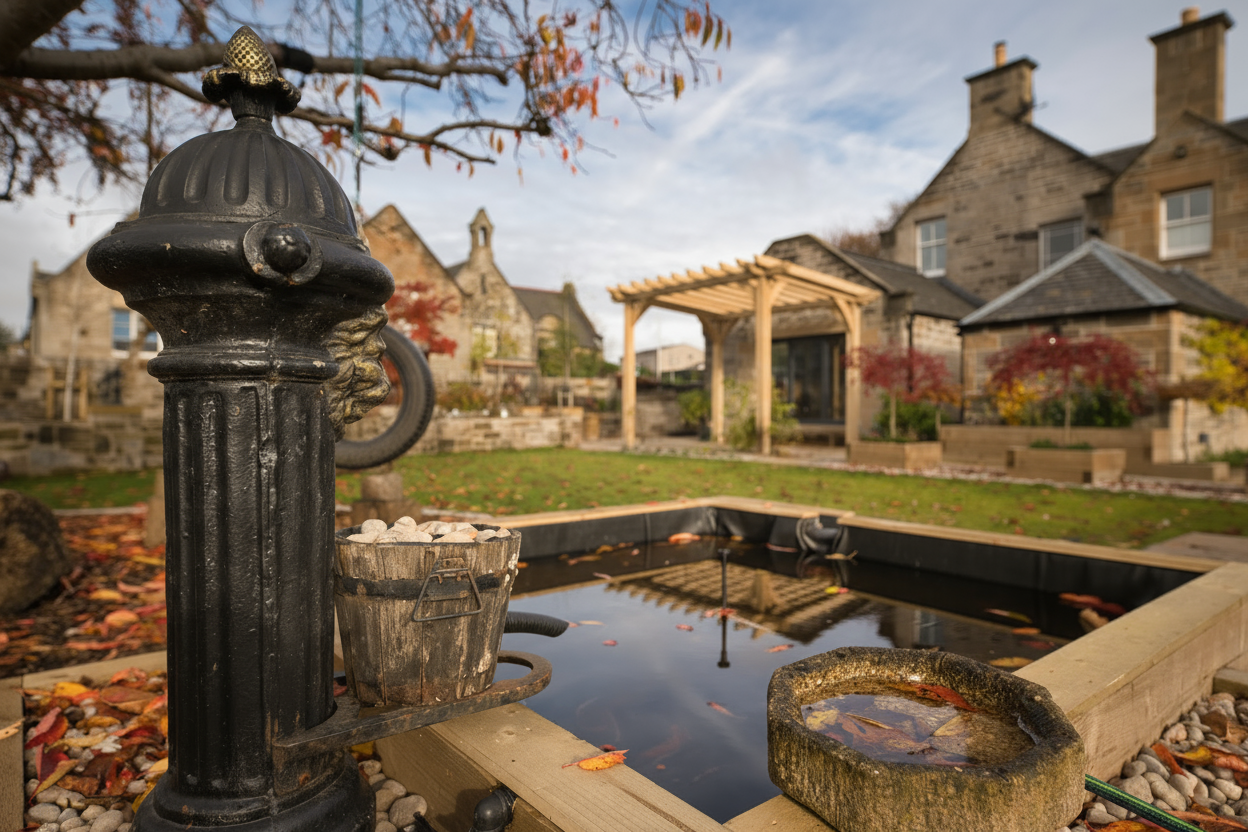
Uplighting transforms mature trees into dramatic focal points. We position lights 1-2 meters from tree trunks at 45-60 degree angles, washing light upward through branches. This works particularly well with birch, oak, and ornamental cherry trees common in Scottish gardens. In autumn, uplighting highlights seasonal color; in winter, bare branch architecture creates striking silhouettes. Always use wide-beam fixtures (60-90 degrees) to avoid harsh shadows.
Water features benefit enormously from lighting - we've installed underwater lighting in dozens of ponds and water features across Stirling and Edinburgh. IP67-rated submersible fixtures withstand continuous immersion, while careful positioning prevents blinding glare. For wall-mounted water features, backlighting creates glowing water sheets. Fountain lighting requires sealed fixtures rated for constant water contact - standard garden lights fail rapidly in these applications.
Wall washing involves positioning fixtures to graze light across property facades, garden walls, or raised bed faces. This technique reveals texture beautifully - Edinburgh sandstone, Falkirk brick, or rendered walls all benefit from grazing light. We install fixtures 500-800mm from walls, adjustable brackets allowing fine-tuning after installation. This is particularly effective on properties with architectural detail - Georgian Edinburgh homes, Victorian villas in Dunfermline, or modern Livingston developments all benefit from appropriate feature lighting.
Ambient & Mood Lighting
String lights and festoon installations create instantly welcoming atmosphere. We permanently install weatherproof cabling systems that allow removable decorative lights - swap festoon bulbs for different occasions or remove completely during winter if preferred. This requires thoughtful planning; we've seen too many installations where strings sag, fixings fail in wind, or cables become visible eyesores. Proper tensioning, quality fixings, and strategic routing are essential.
Pergola integrated lighting is our specialty - we've built and lit dozens of pergolas across Central Scotland. LED strips can be routed within pergola rafters, creating indirect glow without visible fixtures. Alternatively, pendant lights or lanterns suspended from crossbeams provide task lighting for dining while maintaining ambiance. Power supplies are concealed within posts or routed underground, keeping visible wiring to zero. This attention to detail separates professional installations from amateur attempts.
Raised bed lighting adds drama to tiered gardens common on Stirling's sloped terrain and many Edinburgh properties. We install low-voltage strip lighting beneath coping stones, highlighting the structure while preventing glare. This is particularly effective with sandstone or railway sleeper raised beds, where light emphasizes material texture. As a bonus, raised bed lighting provides excellent low-level path illumination for stepped gardens without dedicated path lights.
Security Lighting
PIR (Passive Infrared) motion sensors remain the most reliable security lighting trigger. Modern sensors distinguish between human movement and small animals, reducing false triggers. We position sensors carefully - corner mounting provides wide coverage while minimizing blind spots. In Edinburgh gardens, positioning height matters; too low and hedgehogs trigger lights, too high and crawling intruders go undetected. 2-2.5 meters proves optimal for most residential properties.
Smart integration is increasingly requested, particularly in Stirling and Perthshire where tech-savvy homeowners want comprehensive smart home systems. Ring and similar systems combine lighting with video cameras, sending alerts to smartphones when motion detected. These integrate with broader home security, allowing single-app control of all systems. We coordinate lighting with CCTV positioning, ensuring lit areas correspond with camera coverage zones.
Dusk-to-dawn sensors provide automatic operation without manual intervention. These photocells detect ambient light levels, switching lights on at sunset and off at sunrise. In Scotland, this means dramatic seasonal adjustment - lights activate at 4pm in December, 10pm in June. This is particularly useful for always-on security lighting at front entrances or driveway approaches. Combine with motion sensors on main garden lighting for balanced security and energy efficiency.
Designing Your Year-Round Garden Lighting System
Layering light creates professional results. Task lighting serves functional needs - illuminating paths, steps, doorways, and work areas. Ambient lighting provides general illumination for using spaces - patio lighting, lawn area coverage, seating zones. Accent lighting adds drama - uplighting trees, highlighting features, creating focal points. The mistake many Edinburgh and Falkirk homeowners make is relying on one type; successful lighting combines all three layers.
Color temperature dramatically affects ambiance and needs careful consideration for Scottish gardens. Warm white (2700K-3000K) creates inviting, cozy atmosphere perfect for entertainment areas and fire pit zones. This is our most common specification for residential Stirling and Edinburgh installations - it feels welcoming in our cool climate. Cool white (4000K-5000K) suits modern contemporary properties in Livingston or new developments, providing clean, architectural lighting. Avoid mixing color temperatures within view of each other; jarring transitions destroy cohesion.
Light pollution and neighbor relations require consideration, particularly in urban Edinburgh areas with small gardens and close boundaries. Direct all lights downward or toward features, never into neighboring properties or upward where it contributes to sky glow. Use shields or hoods on fixtures where necessary. Scotland has relatively dark skies compared to southern England; let's keep it that way through responsible lighting design. Most neighbor complaints involve glare and intrusion; proper fixture selection and positioning prevent issues.
Creating focal points and visual hierarchy guides the eye through your garden. The brightest light draws attention first - usually the main entertainment area or striking feature. Secondary lighting supports wayfinding and safety. Ambient fill lighting prevents dark voids. This hierarchy creates interest and depth rather than flat, even illumination that lacks character. In larger Auchterarder or Perthshire properties, this becomes particularly important for creating defined zones within extensive grounds.
Seasonal adjustments matter enormously in Scotland given our dramatic daylight variation. Timers should automatically adjust throughout the year - on at 4pm October through February, gradually shifting to 9-10pm summer activation. Smart systems handle this automatically; traditional timers require manual seasonal adjustment. We program these during installation, but Edinburgh's unpredictable weather sometimes calls for manual overrides on particularly dark summer days or bright winter evenings.
Integration with existing landscaping is where our experience across 200+ installations shows value. We understand how lighting interacts with the patios, driveways, drainage systems, and planting schemes we install. For gardens we've previously landscaped, we have detailed records of sub-surface infrastructure, making cable routing efficient and avoiding drainage compromise. We can recommend lighting positions that complement existing features - uplighting the specimen tree we planted five years ago, highlighting the raised beds we built, or illuminating the driveway we laid. This holistic approach creates cohesive outdoor spaces rather than lighting that feels tacked-on.
Cost Guide: Garden Lighting Installation Edinburgh, Stirling, Falkirk
Costs vary significantly based on system complexity, property access, and fixture quality. The following ranges reflect our actual installation costs across Edinburgh, Livingston, Falkirk, Stirling, and surrounding areas. Prices include all materials, labor, electrical certification, and warranty.
| Service | Typical Cost | Details |
|---|---|---|
| Basic path lighting (6-8 lights) | £800-£1,500 | Including cable, lights, transformer, installation |
| Comprehensive garden lighting (15-20 lights) | £2,500-£5,000 | Multiple zones, smart controls, quality fittings |
| Fire pit installation with lighting | £1,200-£3,500 | Custom fire pit bowl + perimeter lighting |
| Underground cable installation | £45-£75 per meter | Including excavation, SWA cable, reinstating surface |
| Transformer & distribution box | £200-£450 | Weather-proof, appropriately rated |
| Smart lighting controls | £300-£800 | App-controlled, timers, sensors |
Typical Complete Garden Transformation
£3,500 - £7,000
Includes comprehensive lighting across all garden zones, fire pit installation, smart controls, and professional electrical certification. Most Edinburgh and Stirling properties fall within this range for complete year-round outdoor living transformation.
Installation Process & Timeline
Week 1: Design & Planning
- • Site survey and lighting plan development
- • Power source identification and assessment
- • Cable routing planning avoiding existing drainage and utilities
- • Material selection and fixture specification
- • Detailed quotation and project timeline confirmation
Week 2-3: Installation (5-10 working days)
- • Day 1-2: Cable trenching and laying (weather dependent)
- • Day 3-4: Transformer and distribution installation
- • Day 5-7: Light fixture installation and positioning
- • Day 8-9: Complete system testing, adjustments, commissioning
- • Day 10: Electrical certification, demonstration, and handover
Weather-dependent: Edinburgh's unpredictable rainfall can extend excavation timelines. Falkirk's heavy clay requires longer drying periods after rain before trenching can resume. We schedule installations with buffer time, particularly for autumn/winter projects when weather is less reliable.
Garden Lighting Installation: Locations We Serve
We provide professional garden lighting and electrical installation services across Central Scotland. With over 200 completed installations, we understand regional soil conditions, weather challenges, and local planning requirements.
Primary Service Areas
- • Edinburgh (EH postcodes) - 200+ installations
- • Livingston (EH54)
- • Falkirk (FK1)
- • Stirling (FK7-FK9)
- • Dunfermline (KY11-KY12)
- • Auchterarder (PH3)
- • Linlithgow (EH49)
- • Bathgate (EH48)
- • Alloa (FK10)
- • Kirkcaldy (KY1-KY2)
Secondary Coverage
- • South Queensferry
- • Broxburn
- • Whitburn
- • Musselburgh
- • Tranent
- • Bonnyrigg
- • Dalkeith
- • Penicuik
- • Bo'ness
- • Grangemouth
- • Cowdenbeath
Extended Coverage
- • Bonnybridge
- • Denny
- • Larbert
- • Bridge of Allan
- • Bannockburn
- • All West Lothian
- • All Midlothian
- • All East Lothian
- • All Fife
- • All Clackmannanshire
Most locations are within 20-60 minutes of Edinburgh. We charge no additional travel fees within our primary service areas. For extended coverage locations, minimal travel supplements may apply - discussed during free consultation.
Maintenance & Longevity
Quality LED garden lighting requires remarkably little maintenance - a stark contrast to older halogen systems that demanded frequent bulb replacement and constant attention. Modern LED fixtures last 25,000-50,000 hours in typical use, translating to 15-25+ years in Scottish gardens with 5-hour winter evening operation. Many Edinburgh homeowners will move house before LED replacement becomes necessary.
We recommend annual inspection to verify system integrity - checking all connections remain weatherproof, confirming RCD protection still operates correctly, and ensuring timer settings remain appropriate for current usage patterns. This inspection typically costs £95-145 depending on system size and complexity. Many Stirling and Falkirk clients schedule this as autumn preparation before heavy winter usage begins.
Cleaning requirements are minimal but worthwhile. Twice-yearly cleaning maintains optimal light output - Scottish weather deposits algae, moss spores, and airborne pollution on fixtures over time. A simple wipe with warm soapy water and soft cloth restores full brightness. Ground-level lights need more frequent attention than elevated fixtures; path lights accumulate soil splash during heavy rain. This is DIY-friendly maintenance requiring no electrical knowledge or special tools.
Scottish climate weathering affects fixture appearance over years. Stainless steel maintains shine with occasional cleaning, while powder-coated aluminum may show minor wear after 8-10 years in harsh exposed locations. Corten steel fire pits develop richer patina as they age - this is desirable weathering, not deterioration. We provide 5-10 year warranties depending on fixture quality, and most Edinburgh installations from 2010-2015 remain fully operational on original equipment with only minimal cosmetic aging.
Frequently Asked Questions: Garden Lighting Installation
How much does garden lighting installation cost in Edinburgh and Scotland?
Garden lighting costs vary by system size. Basic path lighting with 6-8 lights typically costs £800-£1,500, while comprehensive garden lighting with 15-20 lights across multiple zones ranges from £2,500-£5,000. A complete garden transformation with lighting, including a fire pit installation, typically costs £3,500-£7,000. DIY installations may seem cheaper but often lack proper electrical certification, weatherproofing, and professional cable laying expertise. Professional installations add £3,000-£8,000 to property value in the Edinburgh market.
Do I need planning permission for garden lighting in Scotland?
Most residential garden lighting doesn't require planning permission in Scotland. However, if your property is in a conservation area or is a listed building, you may need consent for external electrical installations. You must also comply with light pollution regulations - fixtures should be directed downward and not cause nuisance to neighbors. All electrical work must meet Part P Building Regulations and be certified by a qualified electrician. We handle all compliance requirements as part of our installation service.
What type of cable is required for garden lighting?
Garden lighting requires SWA (Steel Wire Armoured) cable for safety and durability. This cable must be buried at a minimum depth of 600mm to protect against accidental damage from garden work. We install cables in protective conduit for additional safety and future-proofing - this allows for easier cable replacement or system upgrades without re-excavating your garden. Our utility laying experience across Edinburgh, Falkirk, and Stirling ensures cables are routed to avoid drainage issues and tree roots.
Can garden lighting be installed in existing gardens without damage?
Yes, we specialize in retrofitting lighting to existing landscapes with minimal disruption. We use precise excavation techniques to navigate around existing patios, driveways, and mature tree roots. For gardens we've previously landscaped, we have detailed records of underground drainage and utilities, making installation even smoother. We carefully lift and relay turf, matching existing paving cuts, and guarantee reinstatement to original condition. Most damage is invisible within 4-6 weeks as grass regrows.
What's the best garden lighting for Scottish weather?
Scottish weather demands robust lighting fixtures. We specify minimum IP65 rating (IP67 for ground-level lights) to withstand our heavy rainfall. Materials matter - 316 marine-grade stainless steel and powder-coated aluminum resist corrosion from our damp climate. All fixtures must withstand freeze-thaw cycles common in Edinburgh winters. LED technology is essential - halogen bulbs fail frequently in cold, wet conditions. We only install CE-certified fixtures tested to British Standards, ensuring they'll perform reliably from October through March when you need them most.
Should I choose low voltage or mains voltage garden lighting?
We typically recommend 12V low voltage systems for residential gardens. They're inherently safer (non-lethal voltage), more flexible for future changes, and easier to expand. Installation costs are similar, but low voltage offers peace of mind especially in family gardens. However, mains voltage (230V) is better for very large properties or commercial applications where cable runs exceed 30 meters. Running costs are virtually identical with modern LED technology - expect £30-60 annually for a typical 15-light system. Low voltage systems also allow for more DIY-friendly fixture changes after initial professional installation.
How long does garden lighting installation take?
A typical residential garden lighting installation takes 5-10 working days. Week 1 covers design consultation, site survey, and planning. Installation then takes 5-10 days: 1-2 days for cable trenching and laying, 1-2 days for transformer and distribution installation, 3-4 days for light fixture installation, and 1-2 days for testing, adjustments, and commissioning. Edinburgh's unpredictable weather can extend timelines - heavy rain delays excavation work. For larger properties in Stirling or St Andrews, allow an additional 2-3 days. We can stage installations to minimize disruption during summer months when you're using your garden most.
Can you install lighting around existing patios and driveways?
Absolutely. We regularly integrate lighting with our previous patio and driveway installations across Edinburgh, Livingston, and Falkirk. For existing Maybury projects, we have detailed records of sub-base construction and drainage, making cable routing straightforward. We can install recessed LED lights in existing paving joints, add uplighting to raised bed walls, and run cables beneath patio edges without disturbing the main surface. This is actually easier than new-build installations because the landscaping is settled. We've retrofitted lighting to over 100 existing gardens, including many we originally landscaped 5-10 years ago.
What is a handcrafted fire pit and can you install one with lighting?
Handcrafted fire pits are custom-designed fire bowls made by skilled artisans, typically from corten steel, stainless steel, or cast iron. You can specify any design - geometric patterns, family crests, Celtic knots, or abstract art. These become stunning garden centerpieces, especially when integrated with perimeter lighting. We install fire pits on appropriate bases (concrete pad or paving) with safety lighting around seating areas. The combination of fire glow and strategic lighting creates magical ambiance for Scottish autumn and winter evenings. Costs range from £800-£2,500 depending on size and design complexity, with lighting integration adding £400-800.
How energy efficient is modern garden lighting?
Modern LED garden lighting is remarkably efficient. A typical 15-light system uses approximately 90-150 watts total - less than two traditional light bulbs. Annual running costs are £30-60 based on Edinburgh electricity rates and 5-hour winter evening usage. Compare this to old halogen systems at £200-350 annually. LEDs last 25,000-50,000 hours (15-25+ years), virtually eliminating replacement costs. Smart controls and timers reduce usage further - program lights to turn off at midnight and you'll halve running costs. Solar lights seem appealing but Scotland's limited winter sun means they're unreliable October-March when you need lighting most. Quality mains-powered LED is the most cost-effective long-term solution.
Can garden lighting integrate with smart home systems?
Yes, modern garden lighting integrates fully with Alexa, Google Home, and Apple HomeKit. We install smart transformers and compatible fixtures that allow app control from anywhere. Set schedules that automatically adjust for seasonal daylight changes, create scenes for entertaining or security, and control everything by voice. Motion sensor integration means lights activate when you step outside. You can link lighting with security cameras, patio heaters, and outdoor speakers for complete garden automation. Smart systems typically add £300-800 to installation costs but provide convenience and energy savings. Popular in Stirling and Edinburgh where tech-savvy homeowners want full smart home integration.
Will garden lighting increase my property value?
Professional garden lighting typically increases property value by £3,000-£8,000 in the Edinburgh and Stirling markets. Estate agents report that quality outdoor lighting is a significant selling point - it demonstrates well-maintained property and extends perceived living space. In competitive markets like St Andrews and Linlithgow, lighting can be the differentiator between similar properties. Buyers increasingly want turnkey outdoor spaces, and lighting delivers immediate usability year-round. The ROI is excellent - even a £5,000 lighting installation typically returns 100-160% on resale. Plus you enjoy the benefits while living there. Properties photographed with evening lighting receive 30-40% more viewing requests in our experience.
Do you provide electrical certification for garden lighting?
Yes, all our garden lighting installations are fully certified to Part P Building Regulations. You'll receive an Electrical Installation Certificate upon completion, which is required for home insurance and property sales. Our electricians hold NICEIC or SELECT membership, ensuring work meets current IET Wiring Regulations (BS 7671). We also provide comprehensive testing documentation including earth loop impedance, insulation resistance, and RCD operation tests. This certification is essential - uncertified electrical work can void home insurance, cause sale complications, and most importantly, poses safety risks. Keep certificates with your property deeds as they're required if you sell your Edinburgh, Falkirk, or Stirling home.
Can you install lighting for winter use in Edinburgh gardens?
Winter functionality is our primary design consideration for Edinburgh gardens. From October through March, darkness arrives by 4-5pm, making gardens unusable without lighting. We design systems specifically for this period - warm color temperatures (2700K-3000K) create inviting ambiance despite cold weather, timers automatically adjust for changing sunset times, and we integrate lighting with fire pits and covered areas to maximize winter comfort. All fixtures are rated for Scottish winter conditions including freezing temperatures, snow load, and driving rain. We've completed over 200 winter-focused lighting installations across Edinburgh, Livingston, and Falkirk - transforming gardens from seasonal spaces into year-round living areas.
What maintenance does garden lighting require?
Garden lighting is remarkably low-maintenance. We recommend an annual inspection to check connections, clean fixtures, and verify timer settings - we offer this service for £95-145 depending on system size. Fixtures should be cleaned twice yearly to remove dirt and algae buildup - a simple wipe with soapy water maintains optimal light output. LED bulbs last 15-25+ years, so replacement is rarely needed during ownership. Our installations include 5-10 year warranties depending on fixture quality. Scottish weather is tough on outdoor fixtures, but quality materials (316 stainless steel, powder-coated aluminum) mean your lighting will look good and function reliably for decades. Most of our Edinburgh installations from 2010-2015 are still operating on original fixtures.
Transform Your Garden for Year-Round Use
Professional garden lighting installation across Edinburgh, Stirling, Falkirk, and all Central Scotland locations. Free consultation, certified installation, comprehensive warranty.