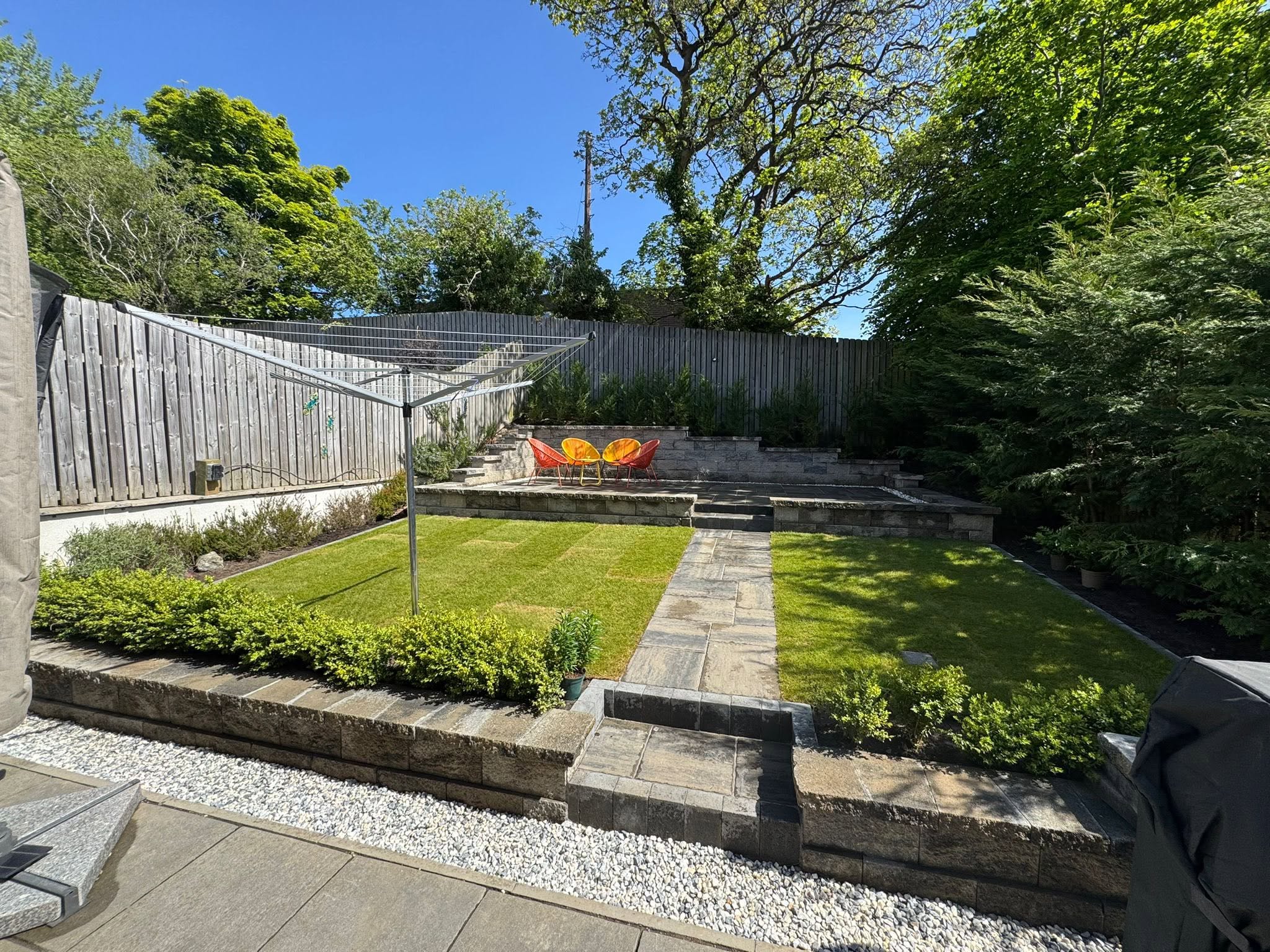
Edinburgh gardens have always had to cope with changeable weather, but recent dry spells across eastern Scotland are a reminder that good garden design now needs to handle more than just rain. A well-designed outdoor space should look great in summer, drain properly in heavy downpours and avoid becoming dependent on constant watering.
For homeowners planning a new garden in Edinburgh, West Lothian, Fife or the wider Central Belt, this creates an opportunity. Rather than designing only for how a garden looks on completion day, you can build a landscape that is easier to maintain and better prepared for the years ahead.
1. Choose plants that can cope with drier conditions
Plant selection makes a huge difference. Drought-tolerant shrubs, ornamental grasses, hardy perennials and Mediterranean-style herbs can create colour and texture without demanding daily watering once established. The key is choosing plants for the actual conditions in your garden, including soil type, exposure, sun and shade.
A good planting scheme also layers plants at different heights and seasons, so the garden still feels full and designed rather than simply “low maintenance”.
2. Improve the soil before planting
Healthy soil is one of the most overlooked parts of garden landscaping. Adding organic matter can improve soil structure and help it hold moisture while still draining effectively. This is especially important when creating new borders around patios, paths or raised beds.
Mulching planted areas after installation can also reduce evaporation, suppress weeds and protect roots during warmer weather.
3. Use hard landscaping intelligently
Patios, paths and driveways are essential parts of many modern gardens, but the layout matters. Large uninterrupted areas of hard surfacing can increase runoff during intense rainfall. A more considered design can combine paving with planted areas, gravel, drainage channels or permeable surfaces to manage water more effectively.
For Edinburgh properties, where gardens often need to work hard in a relatively compact footprint, integrating drainage from the beginning is far better than trying to solve standing water after the garden has been built.
4. Capture rain when it arrives
Rainwater harvesting can be as simple as adding a water butt to a shed, garage or garden room, or it can form part of a larger garden design. Stored rainwater can then be used on containers and newly planted areas during dry spells.
It is a straightforward way to make a garden more resilient without compromising on appearance.
5. Rethink the traditional lawn
A large perfect lawn can require a surprising amount of maintenance and water. That does not mean every garden needs to lose its grass, but reducing the lawn area can create space for patios, planting, seating or more varied ground cover.
For families who still want usable grass, the layout can be designed so the lawn is practical rather than simply filling unused space.
A garden should work in every season
The best garden design is not about reacting to one hot summer. It is about creating an outdoor space that can cope with dry periods, Scottish rain, family life and everyday use without becoming a constant maintenance project.
Maybury Landscaping designs and builds outdoor spaces across Edinburgh, Fife and the Central Belt, including complete garden transformations, patios, paving, drainage, garden rooms and planting. If you are planning a new garden, consider water management and long-term resilience from the first design conversation.
Ready to transform your outdoor space? Contact Maybury Landscaping to discuss your garden design and landscaping project.