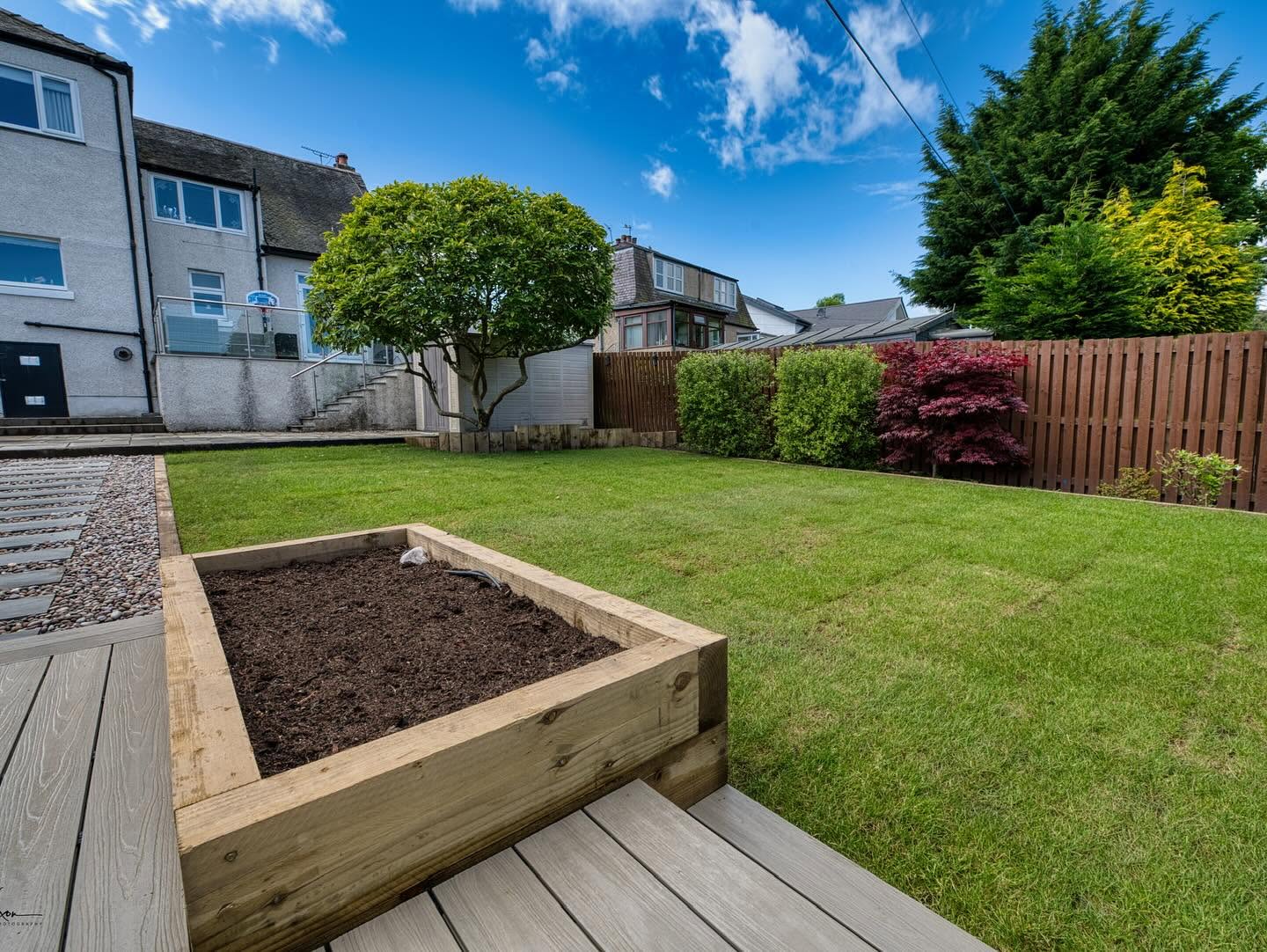
A waterlogged garden can quickly become difficult to enjoy. The lawn feels soft underfoot, puddles remain for days after it rains, and some plants begin to struggle despite receiving plenty of care. In more serious cases, excess water can leave patios slippery, damage fencing and make parts of the garden practically unusable.
This is a common problem in Edinburgh and across the surrounding areas. Regular rainfall, compacted ground, heavy soil and poorly planned landscaping can all prevent water from draining away naturally. The good news is that most waterlogged gardens can be improved once the underlying cause has been identified.
Why Does My Garden Keep Flooding?
Occasional puddles after particularly heavy rain are not always a cause for concern. The real warning sign is water that repeatedly collects in the same places or remains on the surface long after the rain has stopped.
In many Edinburgh gardens, there is more than one factor contributing to the problem. The soil may drain slowly, but the layout of the garden could also be directing water towards the lawn or house. A patio might have been installed without the correct fall, or years of foot traffic may have compacted the ground.
Understanding where the water comes from and why it cannot escape is the first step towards finding the right garden drainage solution.
Heavy or Compacted Soil
Heavy soil contains small particles that sit closely together, leaving less space for water to move through. After prolonged rain, the ground becomes saturated and water begins collecting on the surface.
Soil can also become compacted over time. Regular foot traffic, construction work, heavy machinery and even repeated mowing can press the ground down. This is particularly common in new-build gardens, where building activity may have left a compacted layer beneath a thin covering of topsoil.
Aerating the lawn and improving the soil with suitable organic matter can help with minor compaction. However, if there is a severely compacted layer below the surface, more substantial ground preparation may be required.
Incorrect Garden Levels
Water naturally travels towards the lowest point of a garden. If the ground slopes towards the house, patio or a sunken section of lawn, rainwater will follow the same route every time.
Even a small change in level can make a noticeable difference. This is why professional landscaping involves more than making a garden look attractive. The levels and gradients must also be planned carefully so that surface water moves away from buildings and towards an appropriate drainage point.
Correcting the levels may involve regrading part of the garden, installing retaining structures or redesigning the layout. The right approach will depend on the size, shape and natural slope of the space.
Poorly Installed Patios and Paths
Patios and paths should be installed with a subtle gradient, known as a fall, which encourages water to run towards a safe drainage area. If the paving is completely flat, has sunk in places or slopes in the wrong direction, puddles can begin to form.
Problems can also arise when a large area of the garden is covered with impermeable paving. Rainwater that once soaked into the soil must then find somewhere else to go. Without suitable channels, borders or drainage systems, it may simply flow into the lawn or collect beside the house.
A professionally designed patio should account for surface water before the first slab is laid.
Water Arriving from Neighbouring Land
In a sloping area, the water affecting your garden may not originate entirely within your property. Rain can flow downhill from neighbouring gardens, paths or other higher ground.
This can make the problem more complicated because treating the wettest patch alone may not be enough. The route of the water needs to be understood so it can be intercepted, slowed down or redirected safely.
A proper site assessment can identify whether the water is coming from the surface, moving through the soil or entering from another part of the surrounding landscape.
Blocked or Inadequate Drainage
An existing garden drainage system will not work properly if its channels, grates or underground pipes have become blocked. Leaves, soil, roots and general debris can all restrict the flow of water.
In some gardens, the system may simply be too small for the amount of water it now receives. Changes to nearby paving, extensions or landscaping can increase surface runoff and place extra pressure on older drainage.
Clearing the visible channels may solve a straightforward blockage. Repeated flooding, however, usually deserves a more thorough investigation.
How Can a Waterlogged Garden Be Fixed?
There is no single solution that works for every garden. The best drainage system depends on the soil, levels, available outlets, surrounding properties and how the garden is used.
A reliable landscaper will examine the whole space before recommending any major work. Installing drainage without understanding where the water will ultimately go can simply move the problem from one area to another.
Improve the Soil
For mild waterlogging, improving the condition of the soil may be enough to help rainwater soak away more effectively.
Lawn aeration creates small openings in compacted ground, allowing air and water to reach the soil below. Adding appropriate organic matter can also improve the structure of beds and borders over time.
This approach is most effective when compaction is close to the surface. It is unlikely to solve severe flooding caused by incorrect levels, underground soil conditions or large amounts of runoff.
Install a French Drain or Land Drain
A French drain is a gravel-filled trench containing a perforated pipe. Water enters through the gravel and is carried away through the pipe to a suitable discharge point.
Land drains work on a similar principle and can be useful in lawns, planted areas and around retaining structures. They are often used to intercept water before it reaches the lowest part of a garden.
The position, depth and destination of the drain all matter. A pipe installed in the wrong place or without a suitable outlet will offer limited benefit.
Create a Soakaway
A soakaway collects surface water and allows it to disperse gradually into the surrounding ground. It may be suitable where the soil drains reasonably well and there is enough space to position it safely away from buildings.
However, a soakaway is not appropriate for every Edinburgh garden. If the surrounding soil is already slow-draining or the water table is high, the water may have nowhere to go. Ground conditions should therefore be assessed before this solution is chosen.
Use Permeable Surfaces
Permeable landscaping allows more rainwater to soak into the ground rather than running across the surface. Gravel, permeable block paving and carefully constructed paved areas can all form part of a more sustainable drainage strategy.
Planting beds and lawn areas also help absorb and slow rainfall. A balanced garden design that combines hard landscaping with soft, planted areas will generally manage water more effectively than one dominated by impermeable surfaces.
Add Drainage Channels
Linear drainage channels can collect water from patios, paths and other hard surfaces before it reaches the house or lawn. They are particularly useful near doorways, at the edge of paving and across areas where water naturally flows.
The channels must connect to an appropriate drainage point and should remain accessible for cleaning. Installing a channel without planning where the collected water will go will not resolve the underlying issue.
Consider a Rain Garden
A rain garden is a planted area designed to temporarily hold and filter rainwater. Rather than attempting to remove every drop immediately, it slows the flow and allows water to soak into the ground gradually.
With moisture-tolerant planting and the right construction, a rain garden can turn a drainage requirement into an attractive garden feature. It may also support wildlife and bring more seasonal interest to the landscape.
Rain gardens need to be positioned and designed carefully, especially where the soil drains slowly or the garden sits close to a building.
Choose Plants That Tolerate Damp Conditions
Plants will not solve a serious drainage problem, but choosing the right species can make naturally damp areas more attractive and resilient.
Moisture-tolerant trees, shrubs, grasses and perennials can thrive where other plants struggle. Raised beds may also help by lifting more sensitive plants above saturated ground.
The aim should be to work with the conditions where possible while still addressing any excess water that threatens the lawn, paving or property.
Can Landscaping Make Waterlogging Worse?
Unfortunately, yes. Poorly planned landscaping can reduce the amount of ground available to absorb rain, direct water towards the house or trap it in low areas.
Common mistakes include installing paving without the correct fall, raising ground levels too close to the property, covering too much of the garden with impermeable materials and fitting drainage that has no suitable outlet.
Good landscaping considers water movement from the beginning. Drainage should be part of the design, not something added after the garden starts flooding.
When Should You Call a Professional?
If water remains for several days, repeatedly collects beside the house or makes large areas of the garden unusable, it is worth arranging a professional assessment.
You should also seek advice if the problem began after landscaping or building work, if paving has started sinking, or if water appears to be arriving from neighbouring ground. These signs may point to a wider issue with levels, foundations or underground drainage.
The solution may be relatively straightforward, but an accurate diagnosis can prevent unnecessary excavation and expense.
Garden Drainage Solutions in Edinburgh
A waterlogged garden does not have to become a permanent part of living in Edinburgh. With the right combination of levels, ground preparation, drainage and planting, even a consistently wet space can become practical and enjoyable again.
At Maybury Landscaping, we design and build gardens across Edinburgh and the surrounding areas. Our team can assess how water moves through your outdoor space and recommend a drainage solution that works with the wider garden design.
Whether you need to improve a lawn, correct existing levels, replace poorly draining paving or plan a complete garden transformation, contact Maybury Landscaping to arrange a consultation.
Improve Your Garden Drainage with Maybury Landscaping
A waterlogged garden does not have to become a permanent part of living in Edinburgh. With the right combination of ground preparation, drainage, levels and planting, even a consistently wet garden can become practical, attractive and enjoyable again.
At Maybury Landscaping, we design and build outdoor spaces across Edinburgh and the surrounding areas. We can assess how water moves through your garden, identify the likely cause of the problem and recommend a solution that works with the wider landscape.
Explore our recent landscaping projects, or contact Maybury Landscaping to arrange a consultation.